
Store More Inventory Without Using More Floor Space
Vertical Lift Modules (VLM): The Complete Engineering & Integration Guide
Introduction: Why More Facilities Are Turning to Automated Storage
Stop paying for a building expansion you don’t need. At White Systems, we help facilities reclaim up to 85% of their floor space by turning wasted air into a high-density vertical asset.
-
Recover up to 80–85% of floor space
-
Improve picking accuracy and throughput
-
Centralize and control inventory access
Every inch of warehouse and production space counts. Yet across manufacturing, maintenance, and distribution environments, as much as 60–70% of floor area is consumed by static shelving and aisles. Traditional storage not only limits capacity—it also introduces inefficiencies that ripple across the entire operation: longer retrieval times, ergonomic strain, and higher error rates.
That’s where Vertical Lift Modules (VLMs) come in.
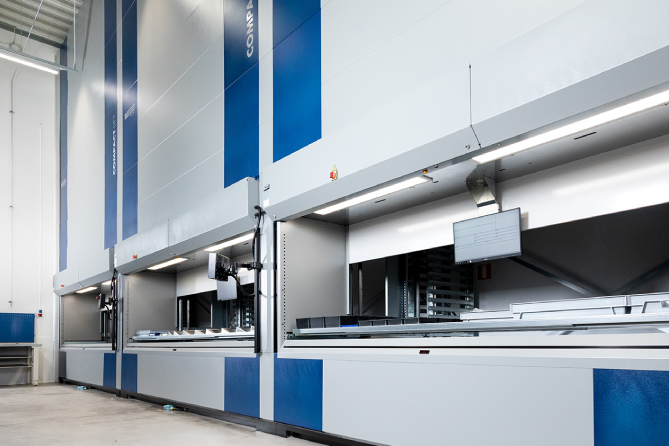
A VLM is an enclosed, automated storage and retrieval system that uses the full height of your facility to deliver items directly to the operator at an ergonomic access window. By storing items vertically and bringing them to the user automatically, VLMs eliminate wasted travel time, maximize cubic storage density, and dramatically improve accuracy and throughput.
At White Systems, we’ve been designing, engineering, and supporting VLM technology for decades. Our Compact Lift, Compact Twin, and Compact Double models are trusted across industries—from manufacturing and aerospace to hospitals, labs, and MRO environments—because they combine reliability, flexibility, and proven ROI.
1. VLM Technology: Definition and Operating Principles
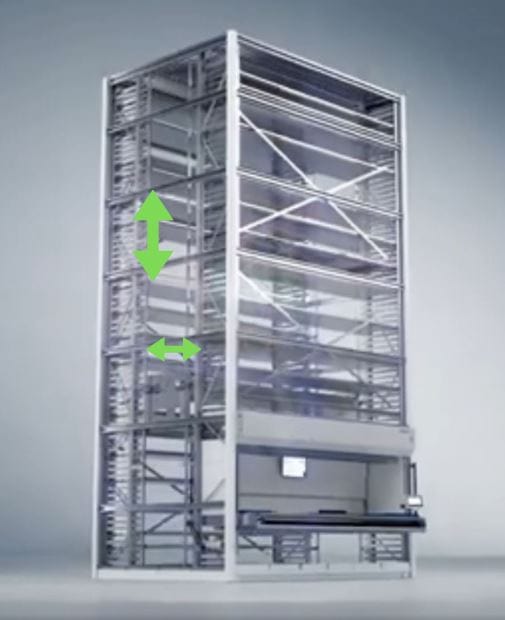
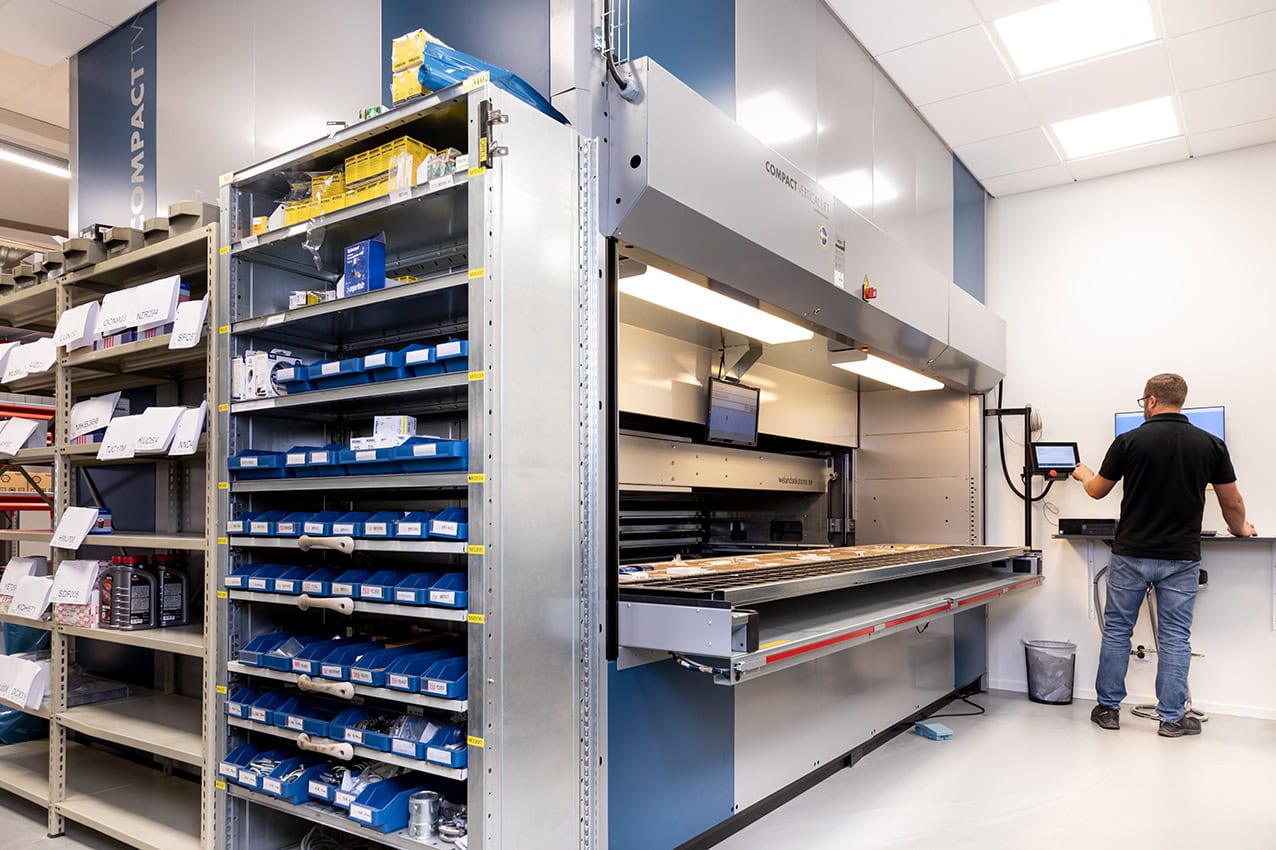
A Vertical Lift Module (VLM) is a fully enclosed automated storage system designed to maximize vertical space and deliver items directly to the operator. Inside the VLM, two columns of trays are arranged on either side of a central extractor. When an operator or connected software requests an item, the extractor automatically retrieves the correct tray and presents it at an ergonomic access opening.
This goods-to-person workflow eliminates walking, searching, and climbing, allowing operators to pick faster and more accurately while using a fraction of the floor space required by traditional shelving.
2. Inside the System: How the Technology Works
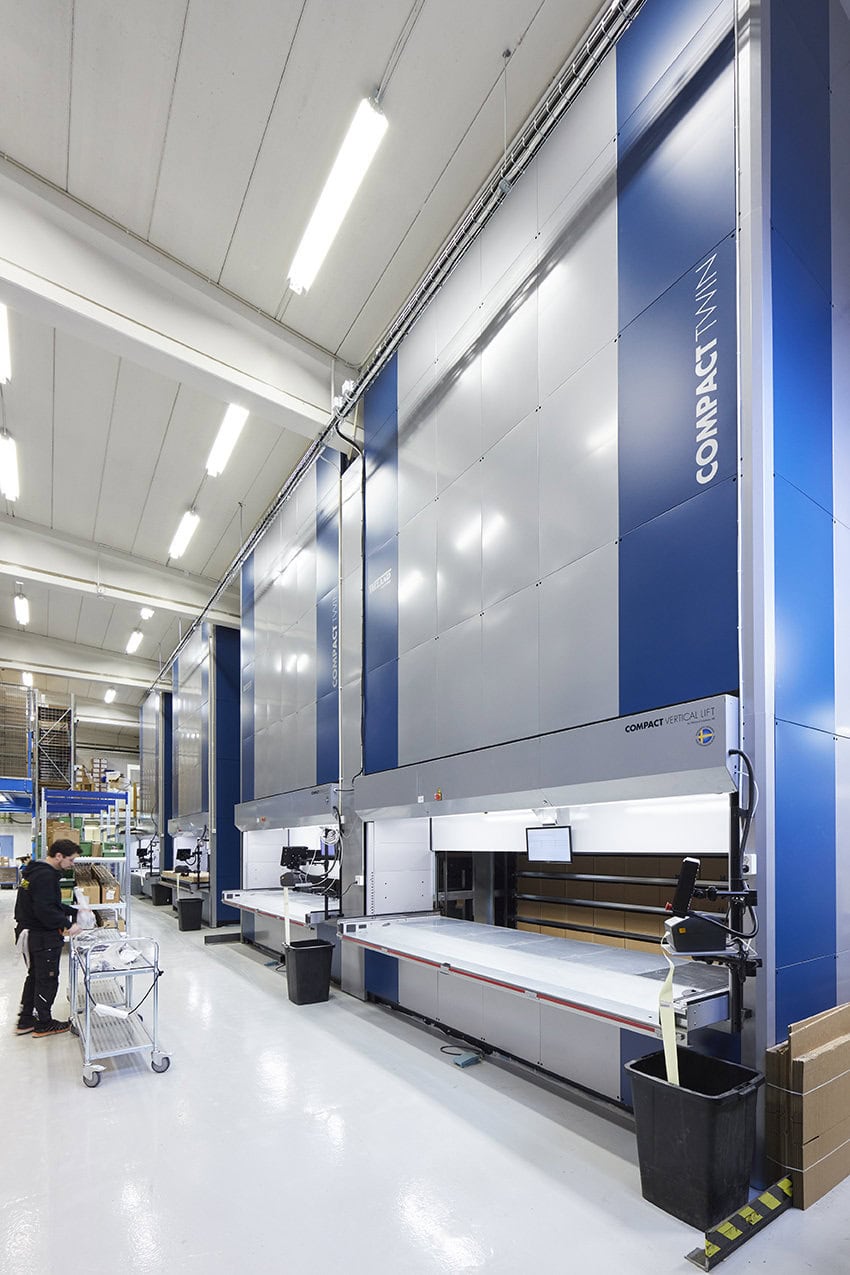
A Vertical Lift Module operates on a simple but highly efficient concept: store inventory vertically and bring the required tray directly to the operator. The VLM’s internal extractor moves up and down between two columns of trays, automatically locating and retrieving the correct tray based on the operator’s request or a connected software command.
1. Dual Columns of Trays
Inventory is stored in two vertical columns—one on the left and one on the right. Each tray holds items based on weight, height, frequency of access, and SKU groupings. The system automatically chooses the optimal tray location to maximize density and balance the load.
2. Central Extractor
The extractor is the core of the system. It travels vertically between the tray columns, lifts or deposits trays, and delivers them to the access opening. Precise movement ensures accurate positioning and smooth operation even at high load capacities.
3. Automatic Height Sensing
As items are placed on a tray, the VLM measures their height. The system uses this information to determine where each tray should be stored, ensuring no vertical space is wasted. By using one-inch storage increments, the VLM continuously maximizes density without operator input.
4. Dynamic Storage Allocation
Unlike static shelving, trays in a VLM do not return to a fixed location. Instead, the system automatically assigns the most efficient storage position based on space availability and usage patterns. Frequently accessed trays can be stored closer to the access opening to speed up retrieval.
5. Goods-to-Person Access Opening
When a tray is requested, the extractor brings it directly to an ergonomic height at the access opening. Operators pick or replenish items without bending, reaching, or walking—reducing fatigue and improving accuracy.
While all VLMs operate on the same principle, the right configuration depends heavily on your workflow.
See how different Vertical Lift Module configurations compare →
Ready to find the right unit for your facility?
Is your ceiling high enough?
Most VLMs require at least 15 feet to see a true ROI. Not sure about your clearance? Speak with a Specialist for a quick facility fit-check.
3. Types of Vertical Lift Modules
White Systems manufactures several Vertical Lift Module configurations to support different capacity requirements, throughput needs, and inventory profiles. While all VLMs operate on the same goods-to-person principle, each model is engineered for specific workflows.
Each model can integrate with inventory management software and automation equipment to create a complete automated storage and retrieval solution (AS/RS) tailored to your facility.
4. Quantifiable Performance Advantages

When engineered correctly, a VLM transforms both storage density and operational efficiency.
For operations or facilities leaders, those numbers translate directly to lower operating costs per SKU and a 12–18-month ROI in most installations.
From 500 Locations to One: The ABB VLM Integration
When ABB needed to optimize their facility, they faced a classic storage crisis: 500 separate storage locations were eating up valuable floor space. By integrating White Systems VLM technology, they were able to consolidate those 500 locations into the footprint of just one VLM unit.
The Result: floor space reclaimed.
-
Reduced travel time for operators.
-
Immediate ROI through better inventory control.
5. Design and Sizing Considerations
Selecting the right VLM starts with a clear understanding of your inventory profile and workflow.
Key design factors:
-
Ceiling Height: Determines maximum unit height and number of trays.
-
Item Dimensions & Weight: Dictate tray type, spacing, and payload.
-
Access Frequency: Drives the choice between single or twin extractor.
-
Integration Needs: WMS/ERP connectivity, barcode systems, or robotics.
-
Environmental Conditions: Cleanroom, temperature, or ESD requirements.
White Systems engineers work directly with your operations team to model layout, calculate space savings, and simulate throughput before installation.
6. Density Comparison: VLMs vs. Traditional Shelving
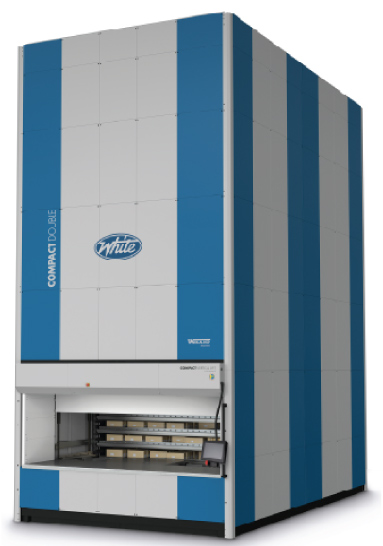
A well-implemented VLM outperforms traditional shelving and carousels for dense, secure, and ergonomic storage.
7. Integration and Maintenance
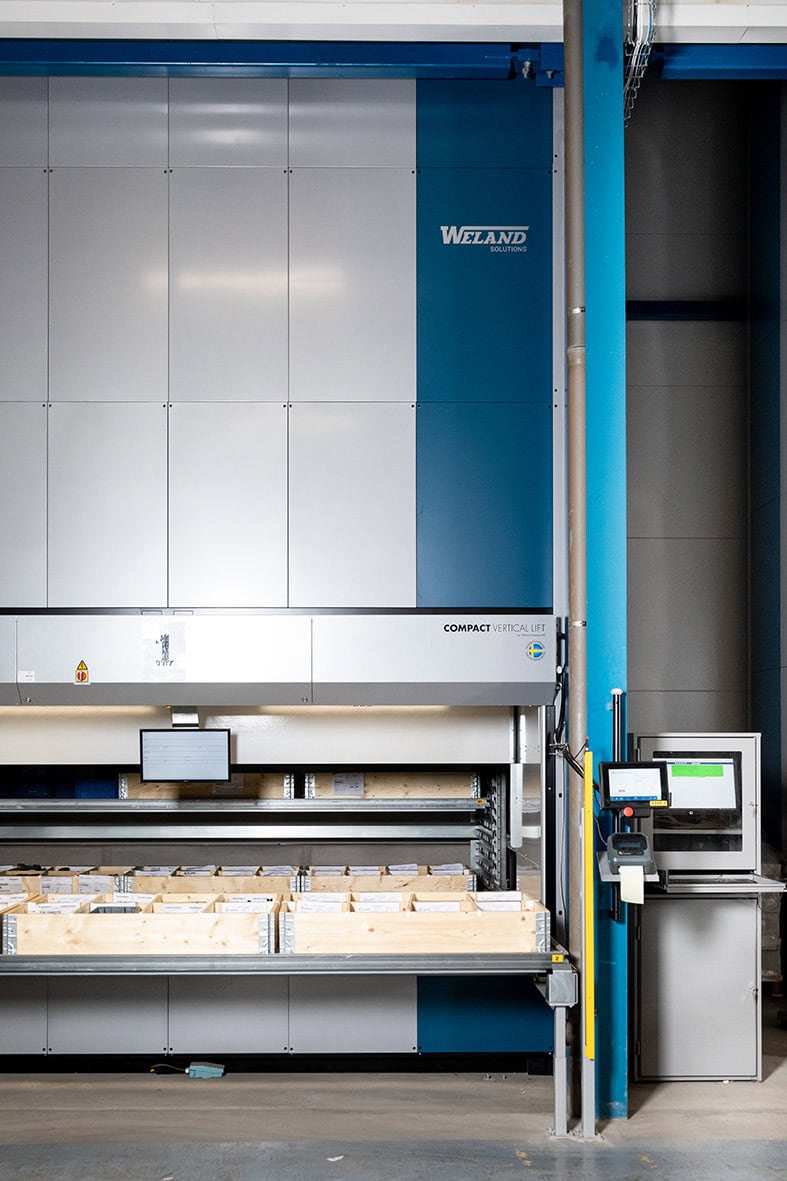
Modern VLMs are designed to integrate seamlessly with existing IT and operational infrastructure.
Software Integration
-
Connects with ERP, WMS, and MES systems
-
Supports barcode, RFID, or badge-based user access
-
Generates pick lists, replenishment tasks, and real-time inventory reports
-
Interfaces with our software platform for centralized control and analytics
Maintenance & Reliability
White Systems provides nationwide service coverage with U.S.-based technicians.
-
Preventive maintenance visits (typically twice per year)
-
Remote diagnostics and troubleshooting
-
Guaranteed response times for contract customers
-
Availability of OEM parts and expert upgrades
Because each Compact VLM is built with heavy-duty industrial components and redundant safety systems, average uptime exceeds 99.5% across our installed base.
8. Real-World Applications: Where VLMs Solve Space Issues
VLMs are adaptable to virtually any environment requiring secure, high-density storage.
Because every unit is modular and customizable, White Systems can design a VLM solution around your unique parts profile, workflow, and compliance requirements.
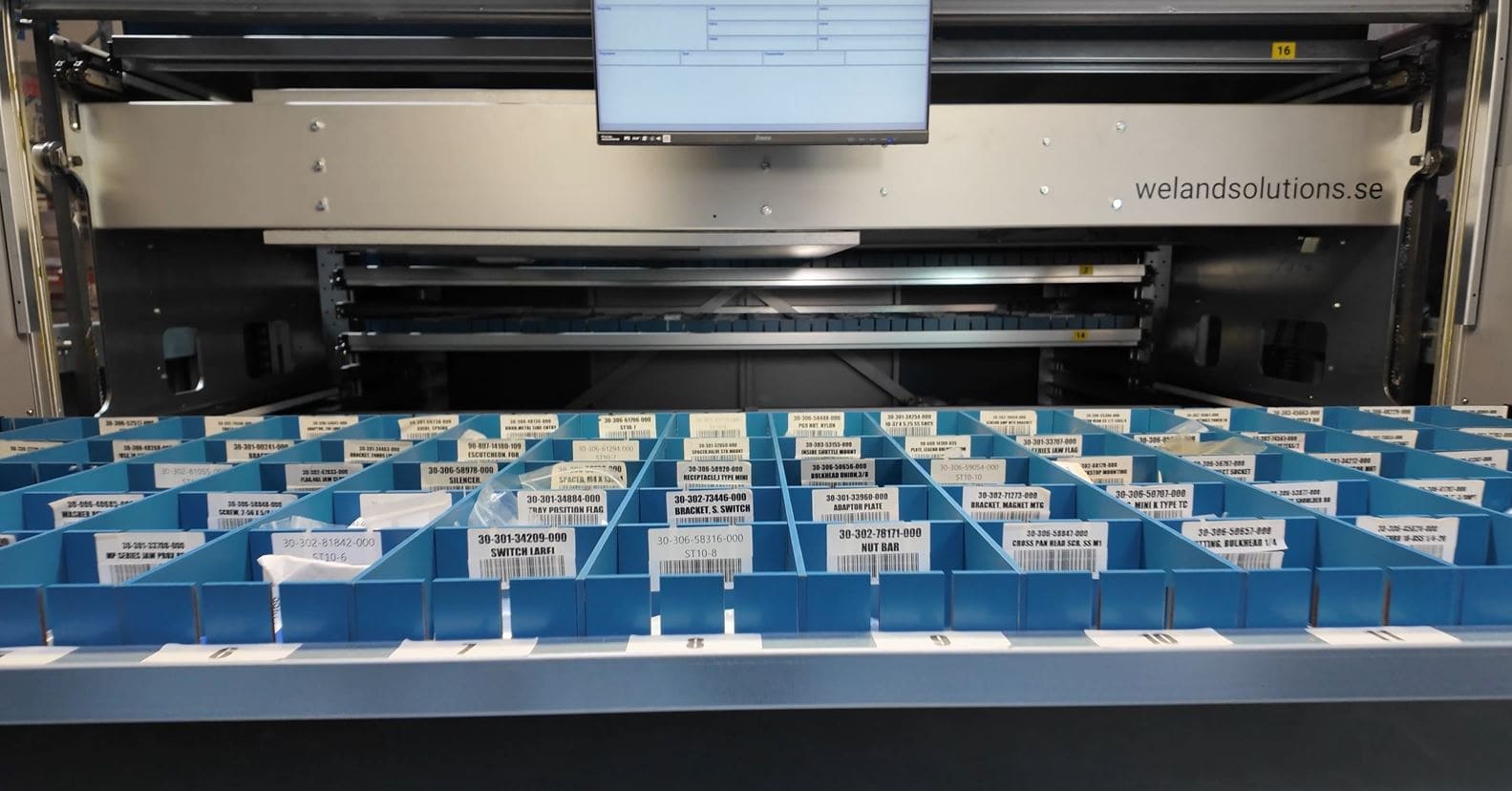
9. Real-World Results
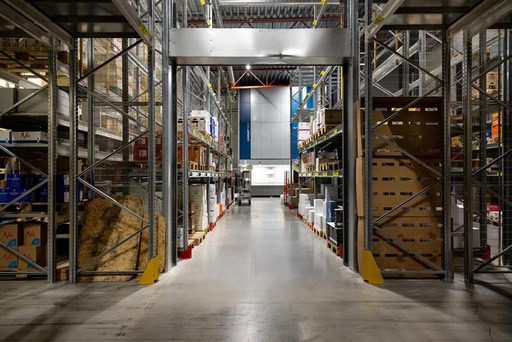
Case Example: Mardskog & Lindkvist — Wine and Spirits Distribution
A European food and beverage wholesaler installed three Compact Twin VLMs to replace traditional shelving for wine and spirits distribution.
Results:
-
78% reduction in floor space
-
4.5× increase in SKU capacity
-
Significantly faster order fulfillment
-
Ergonomic improvements and simplified training
Case Example: U.S. Manufacturer — Aerospace Components
A major aerospace supplier replaced 12 aisles of shelving with three Compact Lift VLM units.
Results:
-
4× faster kitting
-
99.9% accuracy
-
ROI achieved in 14 months
These results are typical when VLMs are applied to high-mix, medium-volume storage operations with strict accuracy and traceability requirements.
10. Innovation: The Next Generation of Automated Storage
Vertical Lift Modules are evolving beyond storage systems into fully connected, data-driven parts of modern operations.
Software-driven optimization
Advanced software now controls tray locations, picking sequences, and inventory organization in real time—continuously improving efficiency without changing physical infrastructure.
Deeper system integration
VLMs integrate directly with ERP, WMS, and MES systems, enabling real-time inventory visibility and automated workflows across the operation.
Higher throughput expectations
As order volumes increase and labor becomes harder to find, operations are demanding faster retrieval times and more efficient picking configurations.
Service and uptime becoming critical
As VLMs take on a more central role, reliable service, fast response times, and ongoing support are essential to maintaining uptime and avoiding disruptions.
Data visibility as a standard
Real-time data, usage trends, and performance insights are now expected—helping teams make better decisions around inventory and workflow.
As these trends continue, VLMs are becoming core operational systems—connecting space, labor, inventory, and software into a single, optimized workflow.
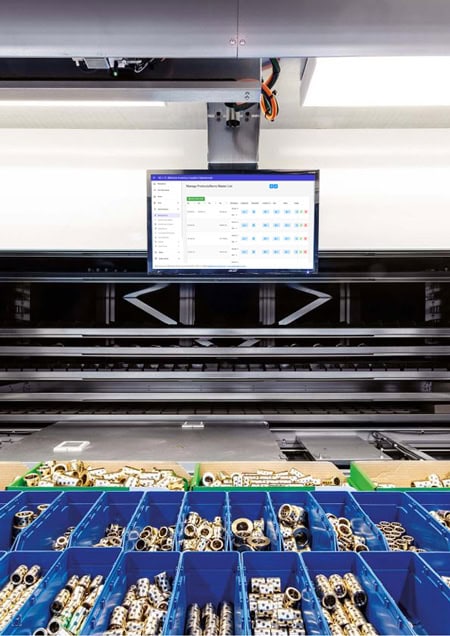
11. Key Takeaways
-
Maximize Space: Save up to 85% of floor area and reclaim valuable square footage.
-
Improve Accuracy and Speed: Achieve 99.9% accuracy and up to 3× faster picking.
-
Enhance Safety: Reduce operator strain with ergonomic access heights.
-
Integrate Seamlessly: Connect to your ERP/WMS and maintain full visibility.
-
Trust Proven Engineering: White Systems provides robust machines backed by U.S.-based service and decades of experience.
12. Frequently Asked Questions
Q: How much does a Vertical Lift Module cost?
Costs vary depending on height, configuration, and options.
Q: Can VLMs handle heavy or oversized items?
Yes. The Compact Double is built for large, heavy, or bulky items and supports up to 2,200 lbs per tray.
Q: How tall can a VLM be?
White Systems VLMs are custom-engineered up to 52 feet tall to take advantage of building height and maximize capacity.
Q: What maintenance is required?
Preventive maintenance is minimal—typically twice per year—to inspect drive systems, sensors, and tray alignment.
Q: Do VLMs integrate with existing software?
Yes. Our systems integrate with leading ERP and WMS platforms, and our control software provides a single interface for all White Systems automation.
Q: What is the best vertical lift module?
There’s no single “best” VLM—only the right configuration for your operation. It depends on throughput, item size/weight, ceiling height, and access frequency. Most teams compare configurations to find the best fit.
Q: How do I choose a VLM system?
Start with your inventory and workflow. Key factors include ceiling height, SKU count, item size, picking frequency, and software integration. Comparing configurations is usually the fastest way to narrow it down.
Q: Are VLMs worth the investment?
In many cases, yes. VLMs can save up to 85% of floor space, improve accuracy, and increase picking speed. Many operations see ROI within 12–18 months, depending on labor and space costs.
Is a Vertical Lift Module Right for Your Operation?
If your operation is running out of space, relying on manual picking, or struggling with inventory accuracy, it may be time to look at a different approach.
Vertical Lift Modules (VLMs) are designed to store more in less space and bring items directly to the operator—reducing travel time, improving consistency, and helping teams keep better control of inventory.
VLM systems are commonly used in operations that:
- Need to increase storage capacity without expanding floor space
- Handle a high volume of SKUs or small parts
- Want to improve picking speed and accuracy
- Require better inventory visibility and control
The next step is understanding what configuration fits your operation.
Want to See the Impact in Your Facility?
Use our quick calculator to estimate potential space savings, efficiency gains, and ROI based on your operation.