
Automotive Parts Inventory Management: How to Improve Accuracy, Space Use, and Picking Speed
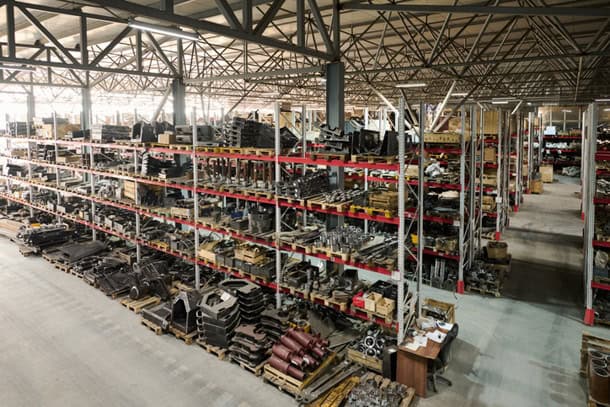
A single automotive parts warehouse can hold everything from fasteners smaller than a thumbnail to transmission housings, often with dozens of near-identical variations of the same part. Add superseded part numbers, seasonal demand swings, and a long tail of slow-moving replacement parts, and even a well-run operation can lose track of what it has, where it is, and how much space it’s costing.
Whether you manufacture vehicle components, distribute parts, or supply the aftermarket, the goals are the same: know exactly what is in stock, put it where it can be found quickly, and pick it right the first time. This guide covers how to improve automotive parts inventory management in each of those areas, and how to tell when traditional shelving has hit its limit.
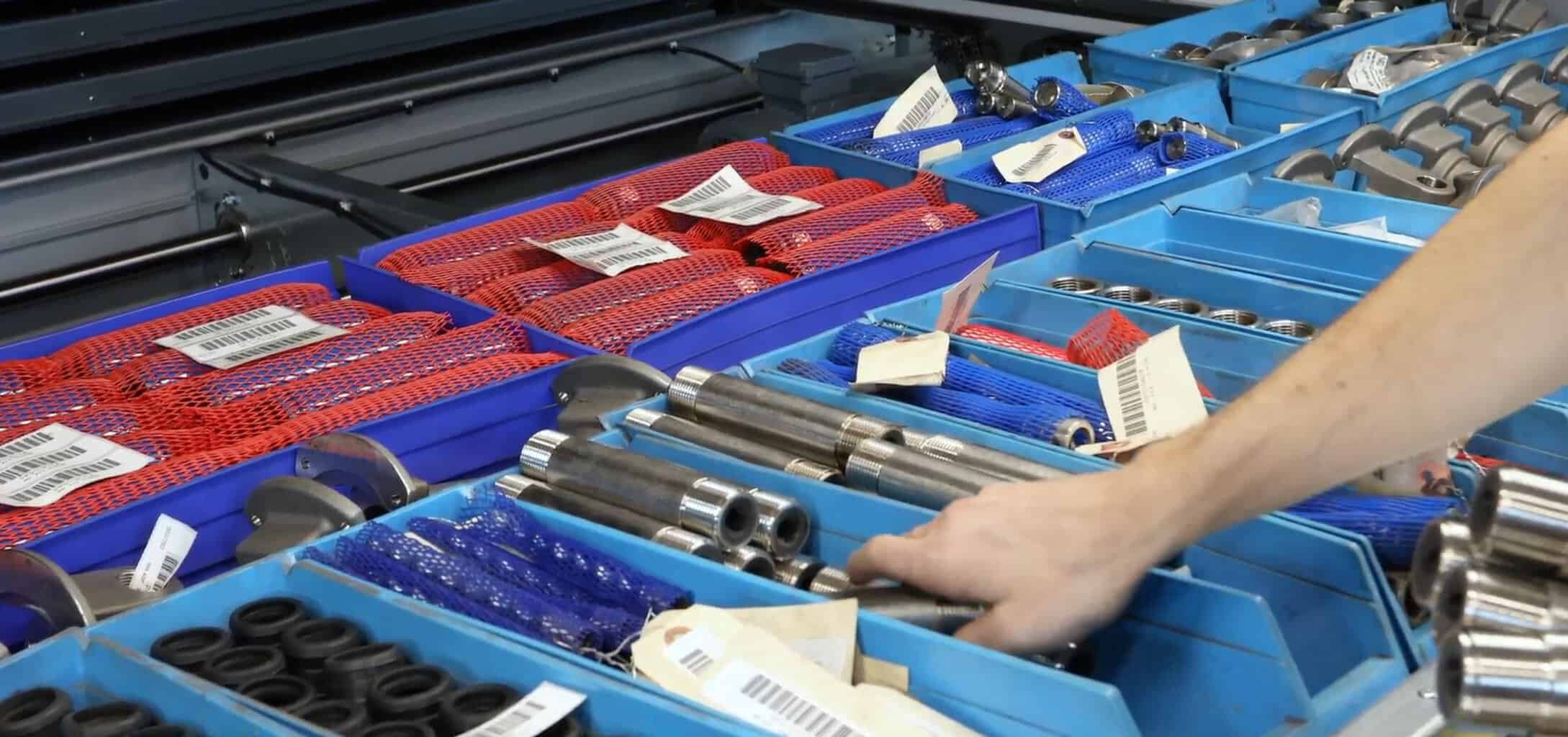
Why Automotive Parts Inventory Is So Hard to Manage
Automotive inventory creates problems that general warehouse storage isn’t built to handle:
- Look-alike parts. Two components can look identical and carry different part numbers, fitments, or revision levels. A wrong pick can stop an assembly line or trigger a return.
- Constant change. Engineering revisions and supersessions mean the part on the shelf may not match the part on the order.
- Uneven demand. A few fast movers account for most picks, while thousands of slow movers occupy space for months or years.
- Mixed sizes and weights. Small hardware, sensors, and heavy assemblies all compete for the same shelving.
The pressures also differ by business type. Manufacturers need dependable access to components for production and kitting. Distributors manage large SKU catalogs and fast order cycles. Aftermarket suppliers track parts across many makes, models, and model years. All three depend on accurate data and fast, correct retrieval.
Start With Clean Part Data
Accurate auto parts inventory management begins with a clean item master. Every part should be tied to one record that includes its part number, description, quantity, and storage location. Depending on your operation, add supplier references, revision level, and lot or serial numbers.
For aftermarket and distribution operations, cross-reference data matters just as much. Track which part numbers supersede others and where a replacement is not interchangeable across every application. Errors here don’t show up as inventory problems. They show up as returns.
Three practices keep records trustworthy:
- Scan barcodes at receiving, putaway, picking, and replenishment to cut manual entry errors.
- Connect those transactions to your WMS or ERP so quantities update in real time.
- Run cycle counts on a schedule, counting high-value and fast-moving items most often, so discrepancies surface before they cause stockouts.

Slot Parts by Size and Picking Frequency
Putting every part on the same shelving is one of the most common reasons picking slows down. A better layout starts with how parts actually move.
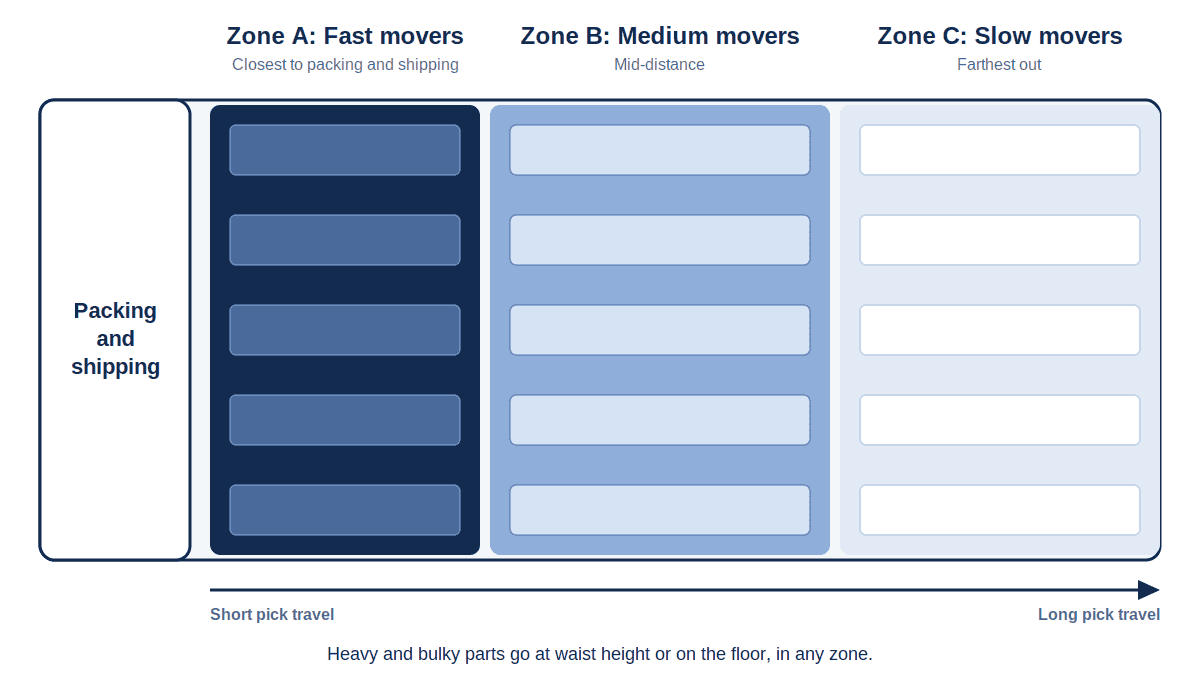
- Put your fastest movers closest to packing and shipping, at easy-to-reach heights.
- Store parts by size and weight so heavy items aren’t forced into locations built for small ones.
- Place parts that are commonly ordered together near each other.
- For manufacturers, store kit components together by assembly station.
- Use vertical space wherever possible. Building height is capacity you’ve already paid for.
Review pick data at least twice a year. A layout that worked when a product line launched rarely holds up as order profiles change.
Make the Wrong Pick Hard to Make
In automotive parts, a picking error rarely stays small. A wrong part delays a repair, interrupts a production line, or forces inspection and rework.
The most effective fix is making the correct pick the easiest one:
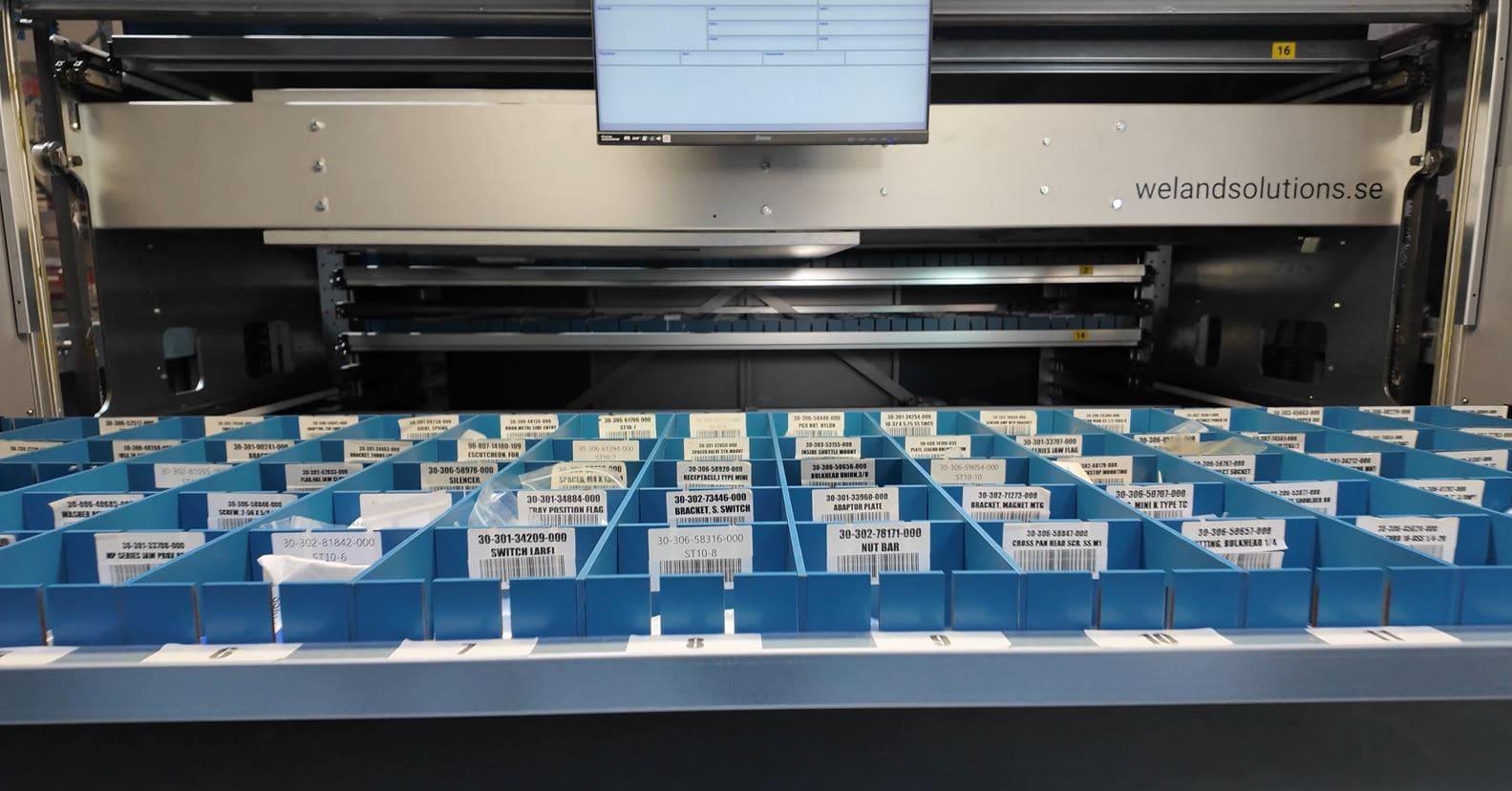
- Label every location clearly and consistently.
- Require a barcode scan to confirm the part before it leaves the location.
- Use batch picking to collect items for multiple orders in one pass when volume is high.
- Add light-directed picking, which shows the operator the exact location and quantity, to replace hunting through printed pick lists.

Keep Slow and Obsolete Parts From Crowding Out Active Stock
New models, revisions, and shifting demand constantly add SKUs, while older parts linger. Without regular review, slow-moving and obsolete inventory ends up in the prime locations that active parts need.
Review demand, lead times, and reorder points on a regular cycle. Set clear rules for flagging obsolete parts, and give returns, warranty items, and anything awaiting inspection a separate location so they never get mixed back into saleable stock.
When Shelving Stops Working
Even a disciplined operation can outgrow conventional shelving. Common signs include:
- Operators spend more time walking and searching than picking.
- Adding SKUs means adding racks, and you’re out of floor space.
- Small, high-value parts need tighter access control than open shelving allows.
- Picking errors persist even after labeling and scanning improvements.
At that point, bringing parts to the operator can solve what better organization alone cannot. Two automated options fit automotive parts well.
Vertical Lift Modules
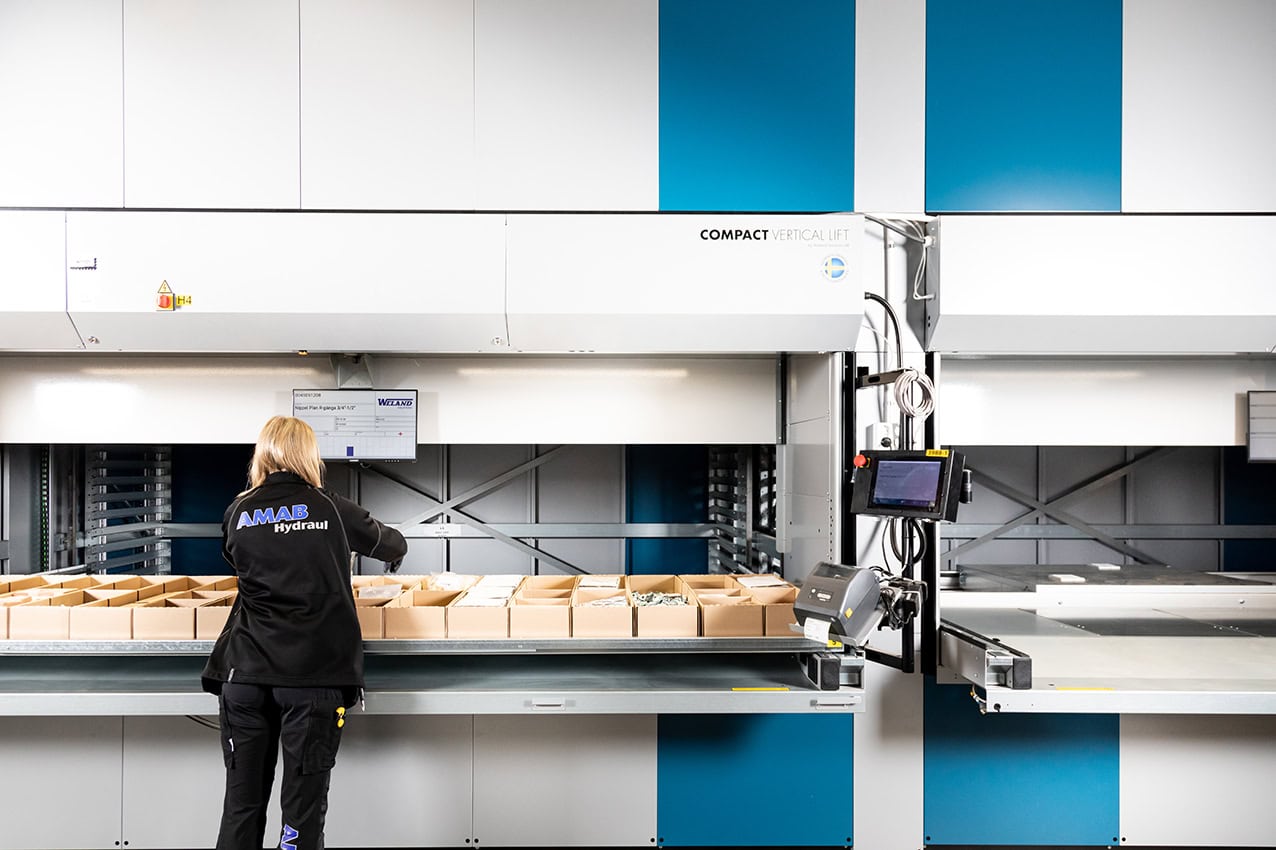
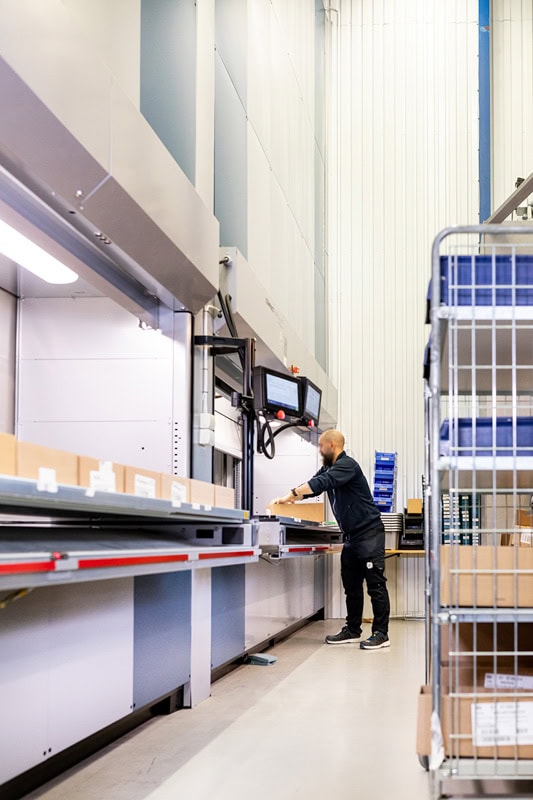
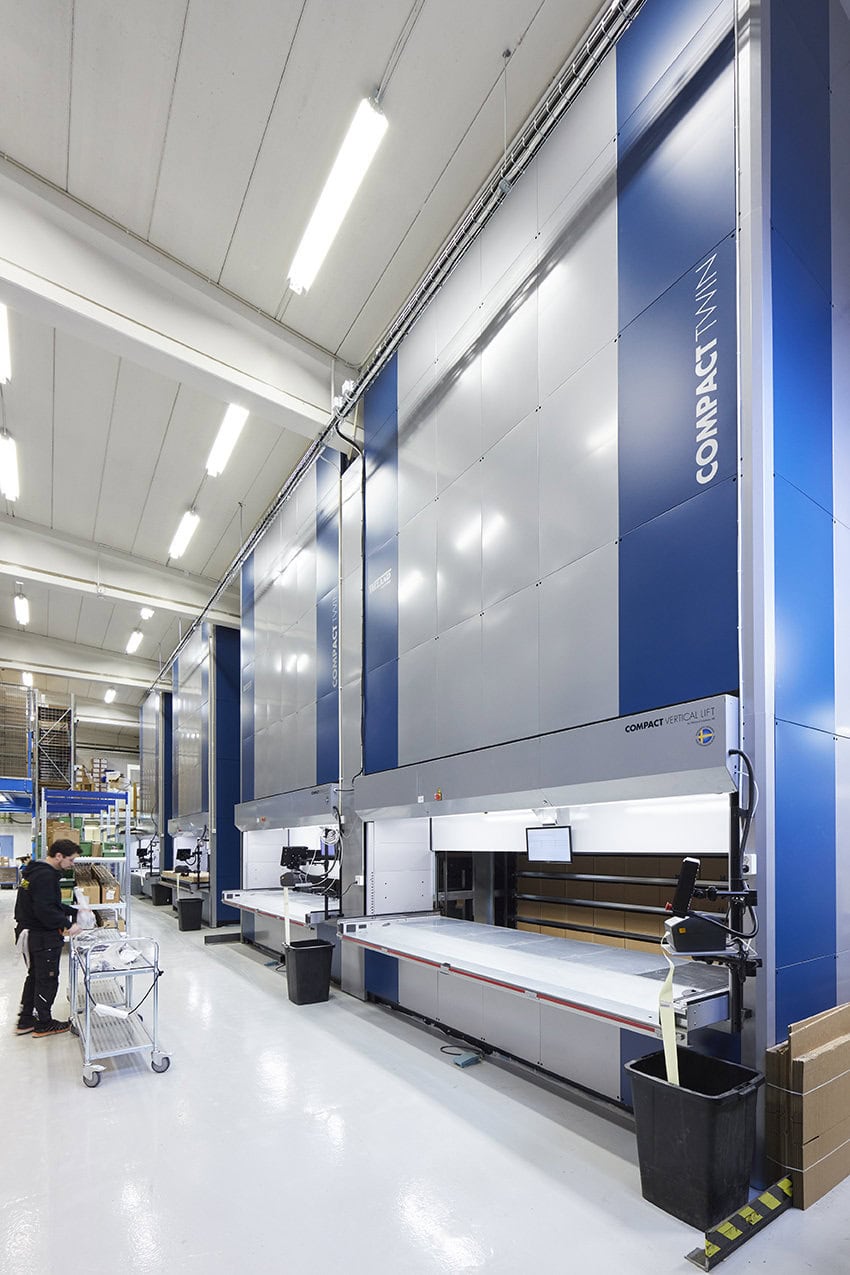
A vertical lift module (VLM) stores parts on trays inside an enclosed, floor-to-ceiling steel unit. When an operator requests a part, the VLM retrieves the right tray and delivers it to an ergonomic access opening. Nothing needs to be searched for or reached.
For automotive parts, VLMs can:
- Free up floor space by storing vertically, often in a fraction of the footprint of the shelving they replace.
- Consolidate parts scattered across multiple storage areas into one location.
- Cut walking and searching time.
- Improve accuracy by showing the operator exactly which part and quantity to pick, supported by inventory management software such as White Systems’ MILO™.
- Restrict access to high-value or sensitive components through software permissions.
Trays can be configured for different part heights, which suits operations with a wide mix of components.
Horizontal Carousels
A horizontal carousel rotates bins or shelves to a stationary operator at a pick station. For distributors with high pick frequency, they are well suited to small and medium-sized parts. Multiple carousels can be grouped into a workstation, so one operator can fill several orders without leaving their position.
How to choose: VLMs are usually the better fit when floor space is tight, parts vary widely in size, or security matters. Carousels are usually the better fit for high-volume, repetitive picking of small and medium parts. Your part dimensions, pick rates, ceiling height, and throughput targets should drive the final configuration.
Measure Results
Any change to your storage or process should be tracked against baseline numbers. The most useful measures for automotive parts operations are:
- Inventory accuracy: how closely system records match physical counts.
- Picking accuracy: the percentage of order lines picked correctly.
- Picking productivity: order lines completed per operator per hour.
- Order fulfillment time: how long it takes to pick and prepare an order.
- Space utilization: how much of your storage capacity is actually in use.
- Stockout frequency: how often a required part isn’t available.
If a metric isn’t improving after a process change, that tells you whether the next step is a layout fix or a different storage system.

Build a More Efficient Automotive Parts Operation
Strong automotive parts inventory management comes down to accurate data, storage organized around how parts actually move, picking processes that prevent errors, and regular review of what’s taking up space. For many facilities, those fundamentals are enough. For others, growing SKU counts, rising order volume, or a tight footprint call for automation.
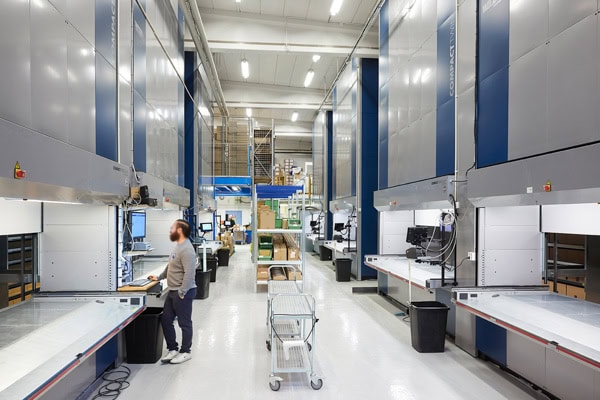
White Systems designs automated storage solutions for manufacturers and distributors with demanding inventory. Explore our automotive parts storage solutions to see how vertical lift modules can improve storage density, picking accuracy, and parts access in your facility.