
MRO Inventory Optimization: How to Improve Spare Parts Availability and Control
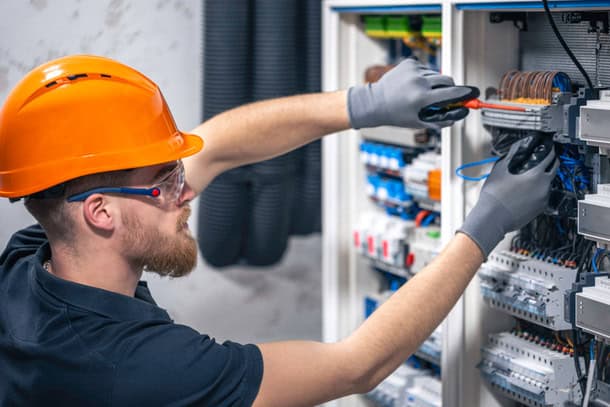
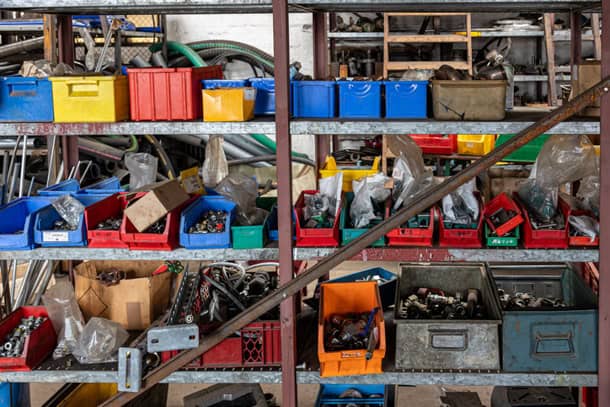
When a critical machine goes down, two things start at once: the repair and the search for the part. The inventory system may say the part is on hand, but if it isn’t where the record says it is, the repair waits. In many facilities, spare parts are spread across shelves, tool cribs, maintenance rooms, and production areas, and finding the right one can take longer than installing it.
MRO inventory optimization solves both sides of the problem: making sure the right parts are on hand, and making sure technicians can find them fast, without overbuying or filling valuable floor space with parts that never move.
Getting there takes more than an accurate count. How parts are classified, replenished, stored, and retrieved all affect maintenance efficiency and equipment uptime.
Why MRO Inventory Requires a Different Approach
Maintenance, repair, and operations (MRO) inventory includes the replacement components, tools, consumables, and supplies that keep equipment running.
Unlike finished goods, demand for MRO parts is hard to predict. Some items are used daily. Others sit untouched for years, then become urgent the moment a machine fails. A single bearing or drive can sit on a shelf for years, then become the only thing standing between a production line and a restart.
That creates a real balancing act. Too little inventory means stockouts and extended downtime. Too much ties up capital and consumes space that could be put to better use.
The goal is not the smallest possible inventory. It is the right inventory for how your operation actually runs.
Prioritize Critical Spare Parts
Not every part deserves the same level of control. A common fastener is cheap and easy to replace. A specialized drive or control module may have a lead time of several weeks and shut down an entire line if it fails.
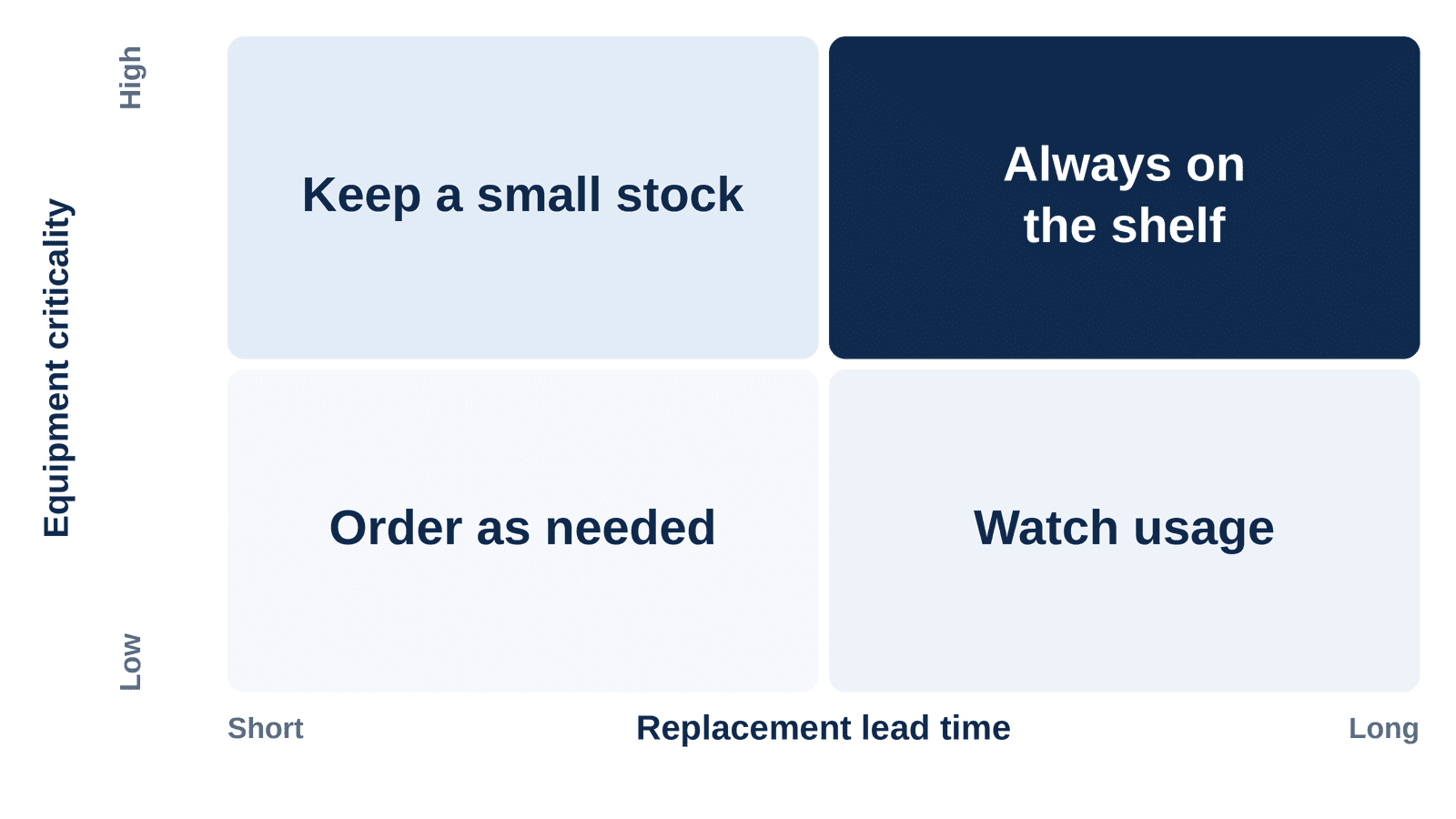
A criticality-based approach, often paired with ABC analysis, helps separate the two. Evaluate each part against four questions:
- Equipment criticality: How badly would operations be affected if this part were unavailable?
- Replacement lead time: How long would it take to get another one?
- Usage history: How often is it replaced?
- Alternatives: Could another component or a spare machine do the same job?
The answers show which parts should always be on the shelf and which can be ordered as needed. For your most critical equipment, a dedicated stock of replacement parts usually costs far less than an extended shutdown.
Improve Inventory Accuracy and Visibility
Unreliable data is one of the biggest obstacles to MRO inventory optimization. Parts get pulled without being recorded, returned to the wrong location, or entered under inconsistent descriptions. Over time, nobody is sure what is actually available.
Start with the basics: consistent part numbers, defined storage locations, and clear transaction procedures. Every record should show what the part is, how many are on hand, and exactly where to find it.
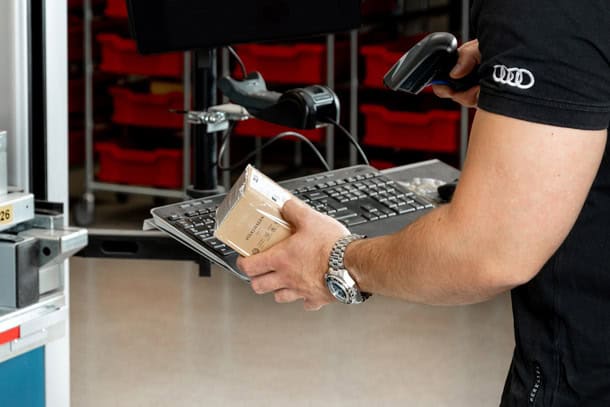
Barcode scanning and inventory management software make this easier by recording parts as they are received, issued, returned, or transferred. Connecting that data to your ERP or computerized maintenance management system (CMMS) ties parts usage directly to maintenance activity.
The payoff is better purchasing decisions and fewer orders for parts you already own.
Balance Availability With Carrying Costs
MRO inventory tends to build up gradually. Parts bought for a repair or a project leave leftovers that sit long after the need has passed. Meanwhile, fast-moving supplies run out because reorder points never kept up with demand.
Set reorder points using usage history, supplier lead times, and maintenance schedules. Frequently replaced items like bearings and filters need regular replenishment. Specialized components should be stocked based on criticality and how quickly they can be replaced.
Two habits keep the balance healthy:
- Cycle counts catch discrepancies before they become bigger problems.
- Regular obsolescence reviews, especially when equipment is retired or upgraded, keep dead stock from piling up.

Improve How Parts Are Stored and Retrieved
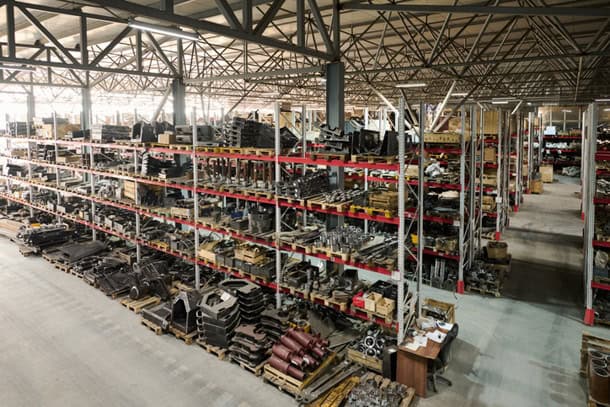
Accurate records do not help much if the storage layout slows technicians down. Traditional shelving means walking between locations, digging through bins, and retrieving parts by hand, and the problem grows with every part you add.
Organizing by part type, equipment application, or frequency of use makes a difference. So do clear labels, designated locations, and consistent handling procedures.
Better labeling, cleaner records, and regular cycle counts only go so far. Once shelving is full and there is no floor space left to add more, the constraint is physical, and reorganizing won’t change it. For many facilities, that is the point where it makes sense to look at storing parts differently.
When Shelving Reaches Its Limit
Automated storage and retrieval systems (ASRS) consolidate maintenance inventory into a smaller footprint while giving you tighter control over what goes in and out.
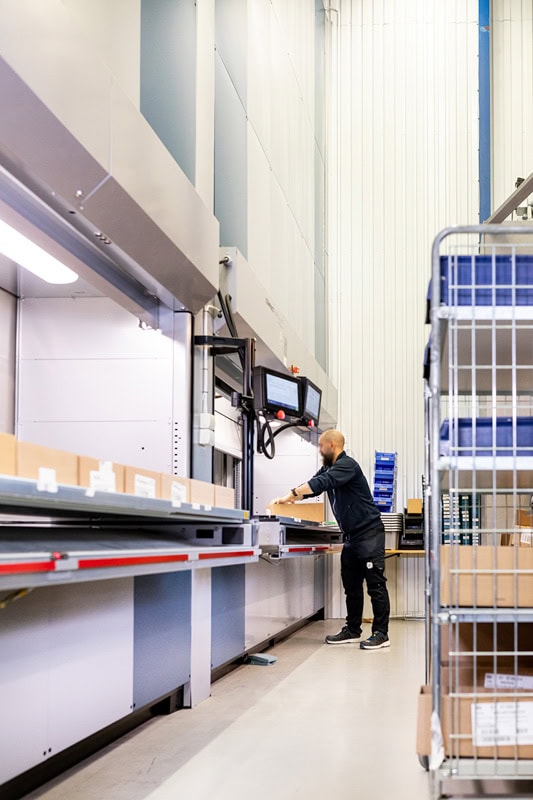
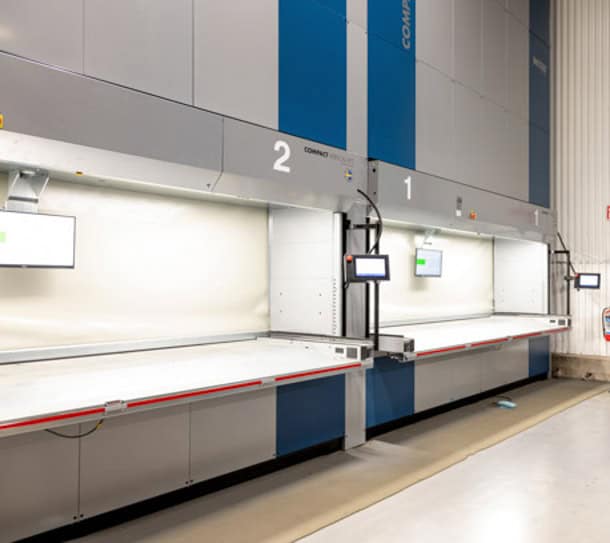
Vertical lift modules (VLMs) store parts in trays inside an enclosed vertical column and deliver the requested tray to the operator at an ergonomic access point. Technicians stop walking aisles and searching bins. They request a part and it comes to them.
For MRO inventory, the benefits go beyond speed:
- Density: VLMs use floor-to-ceiling height, so thousands of small parts can fit in a fraction of the space shelving requires.
- Controlled access: Valuable or sensitive components stay secured, and user-level tracking records who took what and when.
- Accuracy: Barcode verification and software-driven tracking keep records matched to what is physically in storage.
- Fewer mistakes: Guided picking reduces the chance of pulling the wrong part during an urgent repair.
Vertical carousels offer another compact option for organizing parts and supplies, particularly where throughput and part variety are high.
These capabilities matter most for facilities managing large numbers of small parts, high-value tooling, and critical maintenance supplies.
Example: Modernizing Critical Spare Parts Storage
A nuclear power facility managing more than $120 million in MRO inventory needed to replace aging storage infrastructure and improve access to mission-critical components.
The facility had been relying on static racking damaged by repeated forklift strikes, with critical parts spread across multiple storage areas and redundant components hard to locate quickly. It installed Compact Double VLMs to replace that racking with enclosed, high-density storage that delivers each part directly to the operator. The result was safer access with less forklift interaction around dense storage areas, tighter software-supported inventory control, and a more organized process for storing and retrieving the duplicate components required for redundancy.
After the first two units proved successful, the facility added a third VLM to accommodate additional inventory.
Read the nuclear power facility case study to see how automated storage improved inventory control and maintenance accessibility.
Measure the Results of MRO Inventory Optimization
Optimization is ongoing, and measurement tells you whether your changes are working. Track these indicators:
- Inventory accuracy: Many facilities aim for 95 percent or higher.
- Critical spare parts stockout frequency
- Time spent locating components
- Value of obsolete or excess inventory
- Emergency purchasing activity and maintenance delays caused by unavailable parts
Review these numbers over time to decide where to adjust stocking levels, storage organization, and purchasing procedures.


Build a More Reliable MRO Inventory Process
Effective MRO inventory optimization combines accurate records, appropriate stocking levels, and fast access to the parts your technicians need.
For some facilities, better labeling, replenishment rules, and tracking will be enough. Others will get more from consolidating inventory into automated storage that cuts retrieval time and tightens control.
White Systems helps manufacturers organize and secure maintenance inventory with high-density automated storage.
Talk with a White Systems specialist about your MRO inventory optimization goals, or explore our spare parts storage solutions to see how a VLM could fit your maintenance operation.