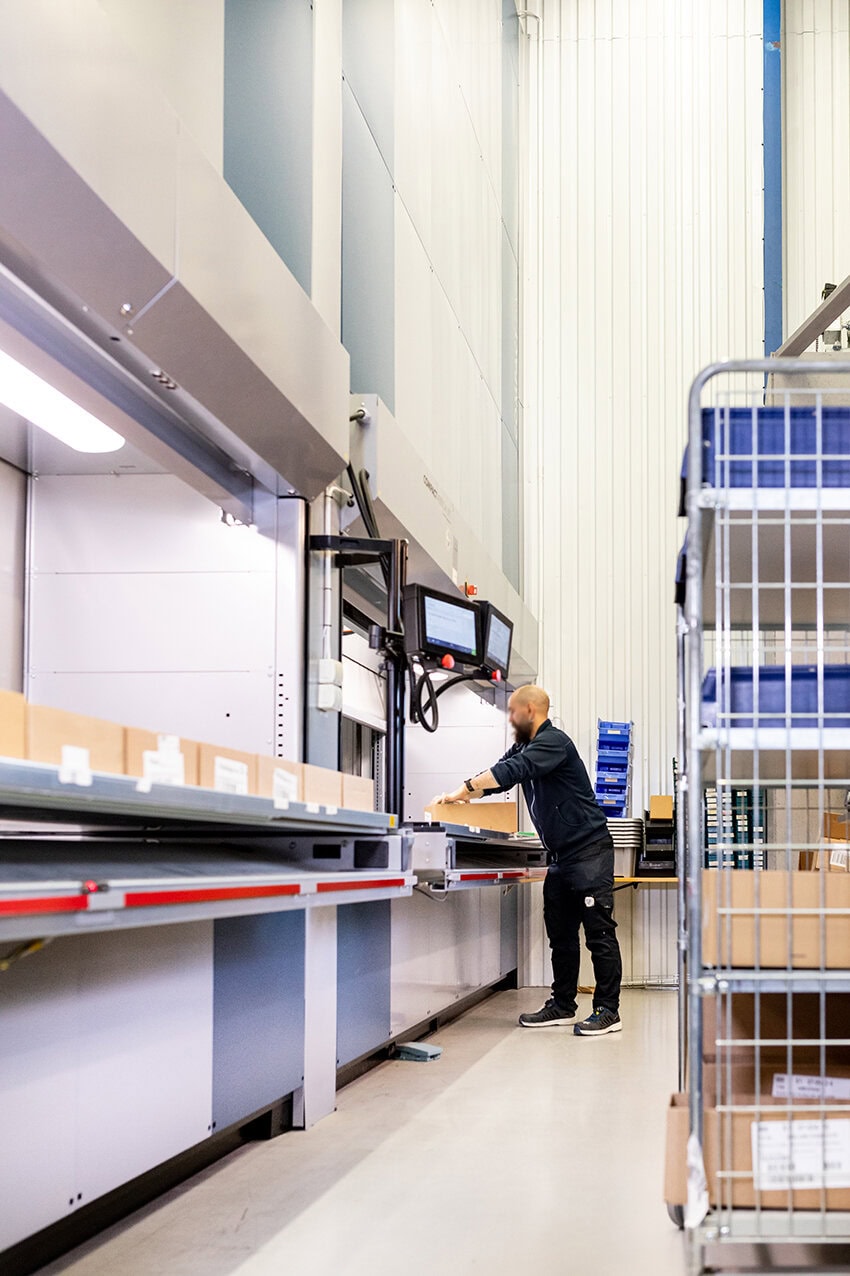
Vertical Lift Modules (VLMs) vs. Vertical Carousels: Which Automated Storage System Is Right for Your Operation?
Both Vertical Lift Modules (VLMs) and Vertical Carousels put inventory in the air instead of on the floor, replacing static shelving with automated “goods-to-person” delivery. But under the hood, they rely on fundamentally different mechanical principles.
The right choice comes down to what you are storing, how uniform your inventory is, your ceiling clearance, and your throughput requirements.
The Short Answer
-
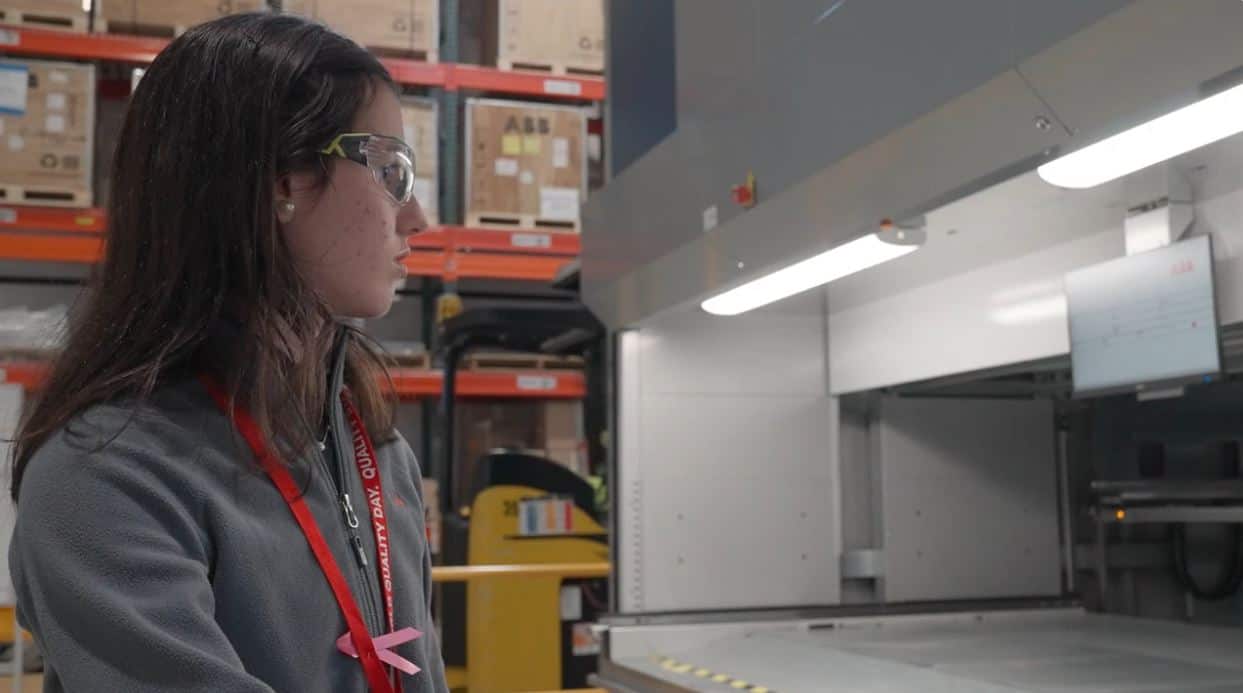
Choose a VLM if you have variable-height inventory, heavy tooling or parts, high ceilings (up to 52 ft), or need top-down ergonomic access for heavy lifting devices. With dual-tray pre-staging, VLMs significantly reduce operator wait times without sacrificing tray capacity.
-
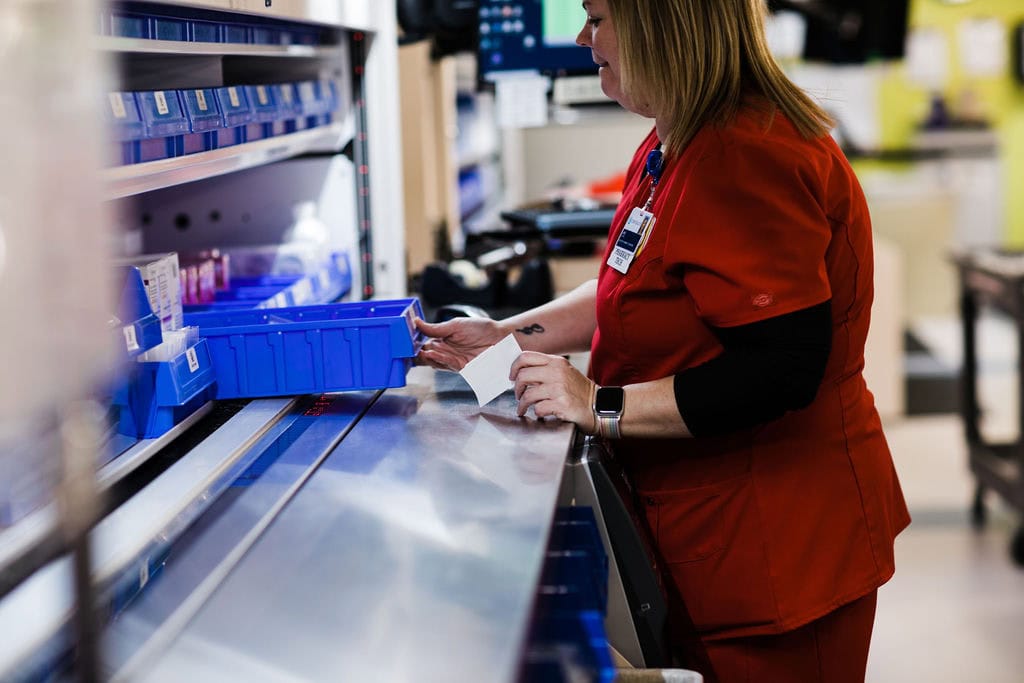
Choose a Vertical Carousel if you have uniform, small-to-medium parts, lower ceiling clearance (under 20 ft), and want a simple, compact footprint for high-frequency small-parts fulfillment using bins, totes, or small shelf drawers.
Detailed Comparison Overview
How They Work
How a Vertical Lift Module Works
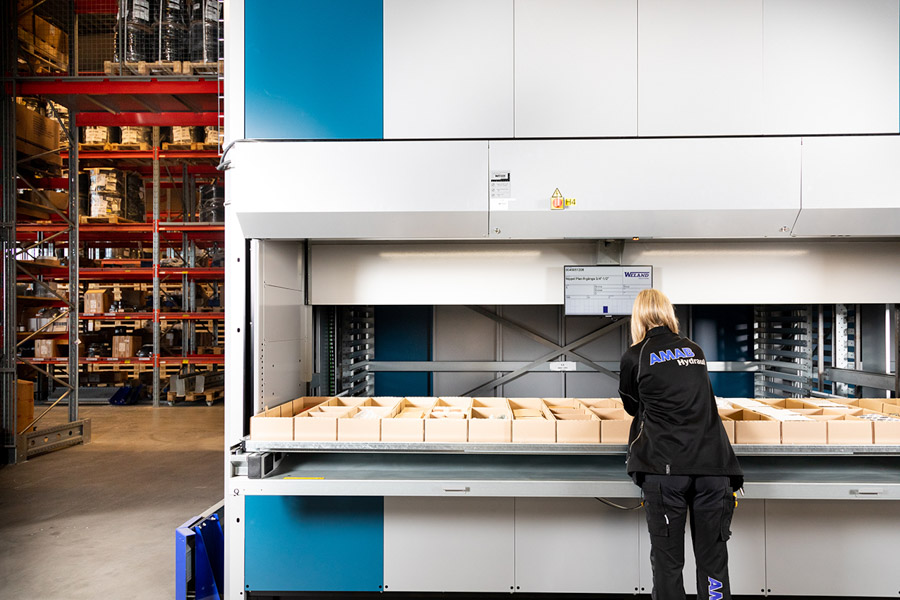
A Vertical Lift Module consists of two facing columns of trays with a central elevator shaft running down the middle.
- Extraction: A central inserter/extractor travels vertically, retrieves the requested tray, and brings it down to the delivery window.
- Dynamic Height Detection: Every time a tray is returned, optical sensors measure the height of the tallest item. The VLM calculates the precise clearance needed and stores the tray in the tightest available vertical location—eliminating wasted air space.
- Dual-Tray Pre-Staging: Dual-tray VLM configurations utilize internal pre-staging. While the operator picks from the active tray, the extractor fetches the next tray in the background when possible. Depending on sequence and timing, this cuts machine wait time by roughly 50% since the next tray is often already queued up when the operator finishes.
How a Vertical Carousel Works
A Vertical Carousel operates as a closed vertical loop of carriers driven by motor-connected chains.
- Rotation: When an item is requested, the entire internal chain rotates in the shortest direction to bring the targeted shelf to the access window.
- Fixed Grid Storage: Shelf heights are set during assembly. Because all carriers move together on a chain, storing items of varying heights leads to fixed “dead air” space across the entire loop.
- Slide-Out Bin Access: Operators reach into the carrier opening horizontally or pull sub-bins and tote drawers forward along the shelf to access interior compartments easily.
Key Decision Factors
1. Ceiling Height & Scalability
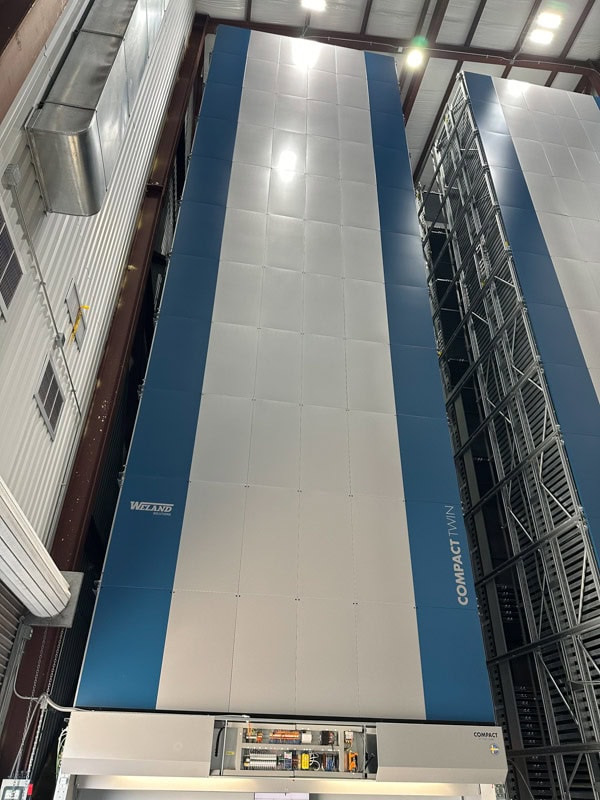
Because VLMs do not rotate an entire chain of heavy goods, they scale efficiently up to 52 feet, maximizing vertical facility space without taking up valuable floor real estate. If you expand your facility in the future, a VLM can be extended vertically by adding modular wall panels. Vertical carousels are generally constrained to lower ceiling heights due to rotational torque and frame load limits.
2. Item Uniformity & Inventory Mix
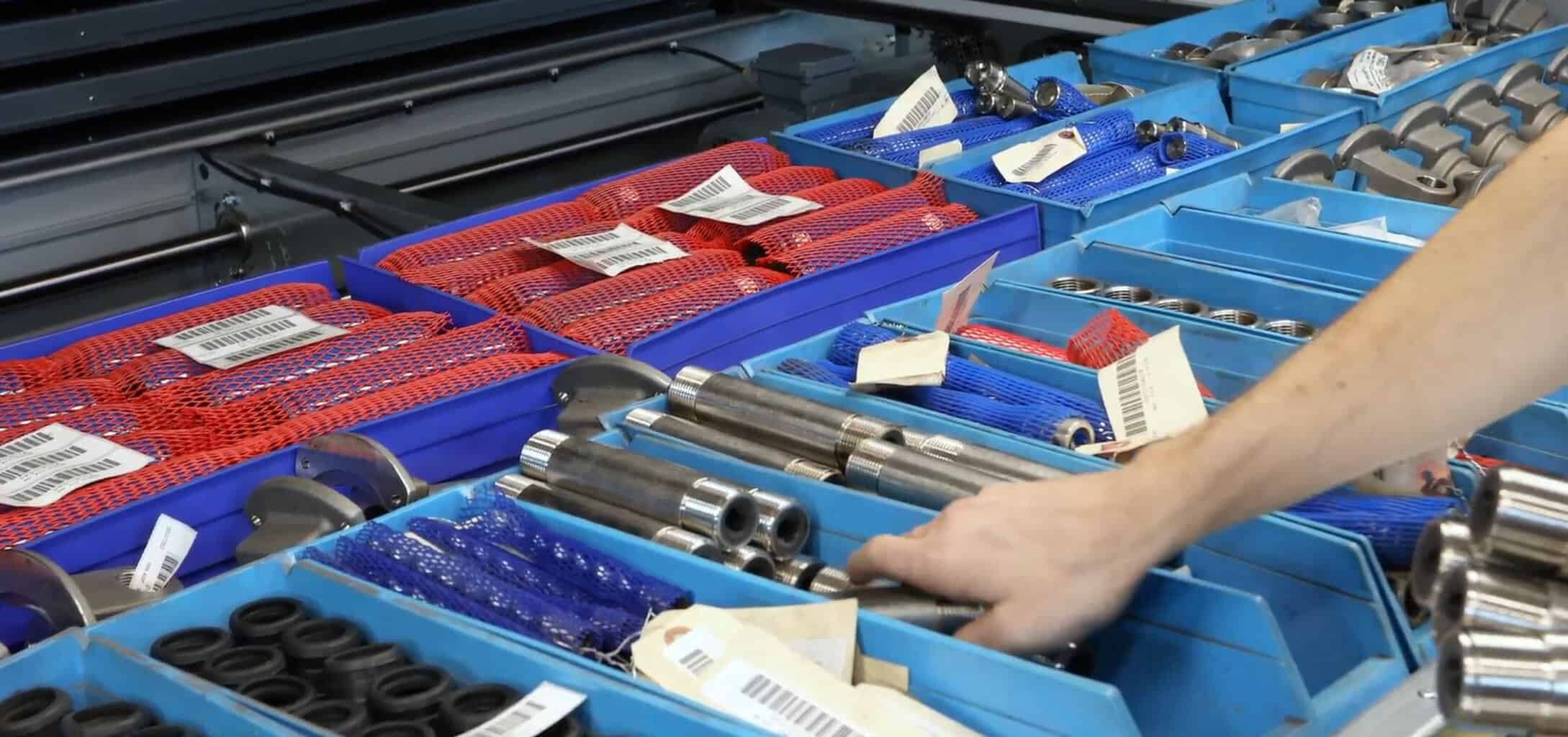
If your SKUs vary in height (e.g., box sizes shift seasonally or tooling shapes differ), a VLM maximizes cube density automatically. If your SKUs are standard, small, and consistent (e.g., pharmacy vials, small electronics components, hardware bins), a Vertical Carousel offers dense storage in a shallow footprint.
3. Ergonomics & Pick Guidance
-
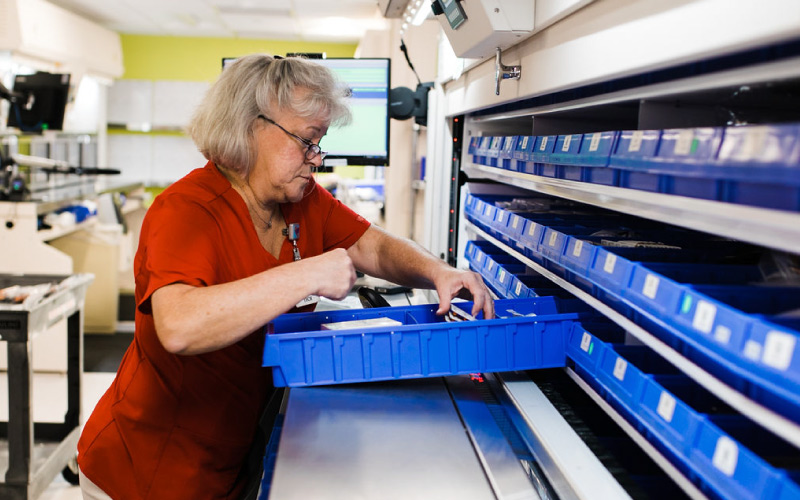
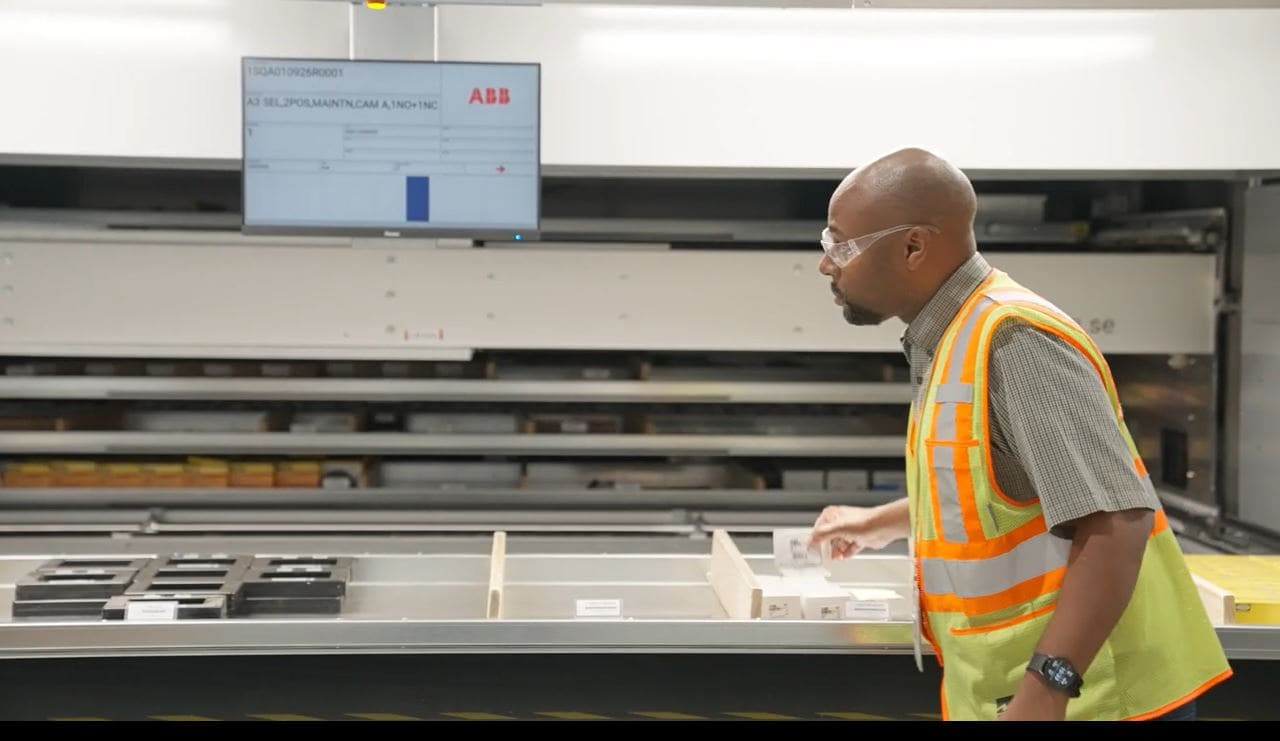
VLMs deliver trays into a fully open delivery window, giving operators complete top-down access. This makes it effortless to integrate overhead hoists or vacuum lifters for heavy parts, alongside overhead laser pointers or bay-mounted LED guidance.
-
Vertical Carousels present goods inside a cabinet-style opening. Pick-to-light guidance is integrated directly along the base lip of the picking area, illuminating the exact bin or compartment row the operator needs to reach into or pull forward.
Summary: Which System Fits Your Operation?
Choose a Vertical Lift Module (VLM) if:
-
You have ceiling clearance over 15 to 20 feet (up to 52 ft).
-
Your inventory features varying heights, heavy parts, or shifting SKUs.
-
You need top-down picking access or integrated overhead lifting devices.
-
You want to reduce wait times with dual-tray pre-staging.
Choose a Vertical Carousel if:
-
You have restricted ceiling height (under 20 feet).
-
Your inventory consists of uniform, small, light-to-medium parts in standard bins.
-
You want a shallow front-to-back footprint for fast-indexing small parts.
-
You rely on light-strip pick guidance along the base of the picking shelf.
Unsure Which System Fits Your Layout?
Choosing between a Vertical Lift Module and a Vertical Carousel comes down to your exact SKU dimensions, weight profiles, and ceiling clearance.
Talk to a White Systems engineer to analyze your inventory profile, map your space savings, and determine the right AS/RS configuration for your facility.
Request a Storage Assessment
Tell us a bit about your facility’s layout and current storage bottlenecks, and a White Systems specialist will reach out to schedule an assessment.