
A warehouse can be busy all day and still operate inefficiently. Orders are moving, employees are picking, and inventory appears organized. But how much time is being lost searching for parts? How much floor space is occupied by inefficient storage? And how much are those problems costing the business?
Warehouse key performance indicators (KPIs) help uncover these hidden costs. By measuring productivity, accuracy, storage utilization, and fulfillment expenses, warehouse managers can identify where operations are falling short and where improvements will have the greatest impact.
Here are eight warehouse KPIs worth tracking, what they reveal, and how to use them to make smarter operational decisions.
1. Order Picking Productivity: How Much Time Is Spent Actually Picking?
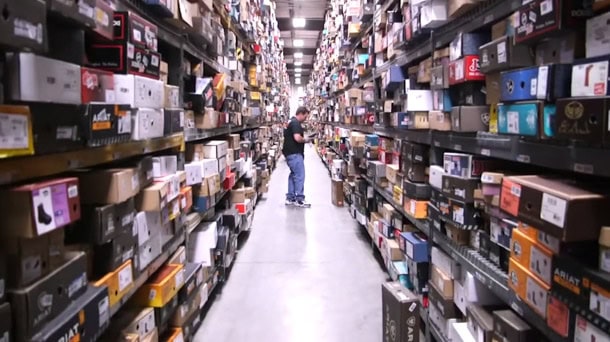
Are your employees spending more time walking than picking?
Order picking productivity measures how many order lines or units an employee picks per labor hour.
Formula: Order lines picked ÷ Picking labor hours
One of the biggest obstacles to productivity in traditional warehouses is travel time. Employees may walk hundreds of feet between storage locations, search through shelving, or wait for equipment before retrieving the next item.
Consider a warehouse with five operators who each spend two hours per shift walking or searching for inventory. That’s 10 labor hours daily, or 2,500 hours annually based on 250 working days.
Reducing that time by just 30% would recover 750 hours of productive capacity each year.
Before adding personnel to increase throughput, consider whether existing employees could accomplish more with a better storage and retrieval process.
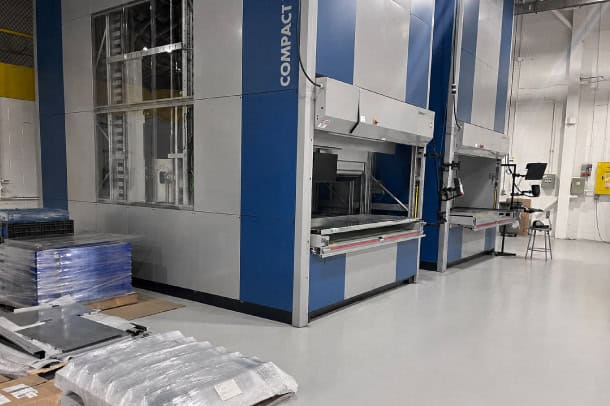
Goods-to-person systems, including vertical lift modules (VLMs) and vertical carousels, reduce unnecessary travel by bringing stored inventory directly to an operator. This allows employees to spend more time picking and less time moving between locations.
2. Space Utilization
Is your warehouse running out of space, or just using it inefficiently?
Warehouse space utilization measures how effectively available storage capacity is being used.
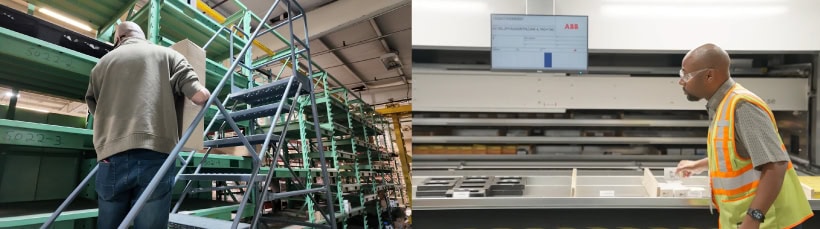
Many facilities evaluate storage based on floor space alone. However, a warehouse with 30-foot ceilings and shelving that only reaches 10 feet high may have significant unused vertical capacity.
Cubic space utilization formula: (Occupied storage volume ÷ Total usable storage volume) × 100
That unused space becomes particularly expensive when companies begin considering facility expansion, off-site storage, or additional warehouse leases.
Before committing to more square footage, evaluate whether existing inventory could be consolidated into a smaller footprint.
Vertical lift modules and vertical carousels use available building height to store inventory within compact, enclosed systems. Depending on the application,
VLMs can reduce storage floor space requirements by up to 85% compared to traditional static shelving.
For businesses experiencing storage constraints, improving space utilization may eliminate or delay the need for expansion.
Before / After
3. Inventory Accuracy
Inventory accuracy measures how closely inventory records match the materials physically available in storage.
Formula: (Inventory records matching physical counts ÷ Total records checked) × 100
Even small discrepancies can create operational problems. A missing component might delay production, while inaccurate stock counts can lead to unnecessary purchasing, emergency replenishment, or unfulfilled orders.
These issues are especially costly in manufacturing, maintenance, and parts distribution environments where having the correct item available at the right time is critical.
Improving inventory accuracy starts with identifying how discrepancies occur. Manual transactions, misplaced items, and uncontrolled access can all contribute to unreliable records.
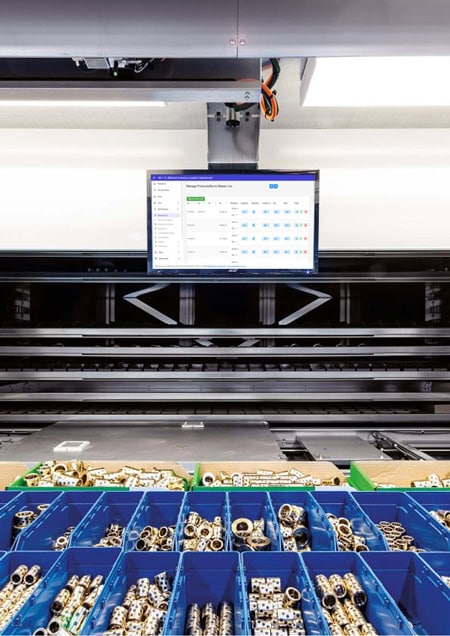
Inventory management software, barcode verification, and controlled storage access help maintain more accurate records. Automated storage systems can support these processes by tracking inventory transactions and restricting access to authorized users.
The goal isn’t simply a higher accuracy percentage. It’s fewer interruptions, less time searching for missing inventory, and greater confidence in what’s available.

4. Order Picking Accuracy
A 99% picking accuracy rate sounds impressive. But what does that remaining 1% actually cost?
For a facility processing 1,000 orders daily, a 99% order picking accuracy rate means approximately 10 orders contain picking errors each day.
Across 250 operating days, that’s 2,500 orders requiring some form of correction.
Formula: (Orders picked without errors ÷ Total orders picked) × 100
The cost of an incorrect pick extends beyond the item itself. Errors can generate additional handling, replacement shipments, customer service work, and production delays.
Improving accuracy often involves better inventory organization, clear picking instructions, and verification technology.
For example, pick-to-light indicators and guided picking software can direct operators to the correct storage location and quantity. When integrated with
VLMs or vertical carousels, these tools help reduce opportunities for picking mistakes while maintaining efficient retrieval.
5. Order Fulfillment Cycle Time
Order fulfillment cycle time measures how long it takes to process an order from placement to readiness for shipment.
Formula: Total fulfillment time ÷ Total orders fulfilled
Long cycle times don’t always indicate that employees are working slowly. Delays often occur between activities.
An order may be picked quickly but sit waiting for packing. Another may be delayed because an operator can’t locate a component or access a storage location.
Breaking fulfillment time into order processing, picking, packing, and shipping preparation helps reveal where these delays occur.
If picking consistently accounts for the largest share of fulfillment time, improving inventory accessibility may be more effective than adding employees elsewhere in the process.
The important distinction is identifying the bottleneck before investing in a solution.
6. Inventory Turnover
Inventory turnover measures how frequently inventory is sold and replaced over a given period.
Formula: Cost of goods sold ÷ Average inventory value
Low turnover can indicate excess stock or slow-moving products, but it doesn’t always signal a problem. Manufacturers and maintenance operations may intentionally keep critical spare parts available for extended periods.
What matters from a warehouse efficiency standpoint is how that inventory affects storage and retrieval.
Slow-moving materials shouldn’t occupy the most accessible locations if frequently picked items are stored farther away. Using inventory movement data to guide storage decisions can reduce unnecessary handling and improve picking efficiency.
For facilities with large SKU counts, high-density storage systems can help consolidate inventory while keeping materials organized and accessible.
Although storage equipment doesn’t directly increase inventory turnover, better organization can make existing inventory easier to manage.
7. On-Time Shipment Rate
On-time shipment rate measures the percentage of orders shipped by their promised date and time.
Formula: (Orders shipped on time ÷ Total orders shipped) × 100
Late shipments are often the result of problems that occurred much earlier in the fulfillment process.
Inaccurate inventory records can delay picking. Congested storage areas can slow retrieval. Inefficient picking routes can prevent orders from reaching packing stations on schedule.
When on-time shipment rates decline, comparing them with picking productivity, inventory accuracy, and fulfillment cycle time can help identify the cause.
Rather than simply pushing employees to work faster, look for recurring obstacles that prevent orders from moving smoothly through the warehouse.
8. Cost Per Order
How much does it actually cost your warehouse to fulfill an order?
Cost per order brings warehouse productivity, space utilization, and accuracy back to a financial measurement.
It includes the labor, equipment, space, supplies, and overhead associated with fulfillment.
Formula: Total fulfillment operating costs ÷ Total orders fulfilled
For example, a warehouse spending $300,000 per month to fulfill 20,000 orders has an average fulfillment cost of $15 per order.
Reducing that cost to $13.50 would generate $30,000 in monthly savings at the same order volume.
That’s $360,000 annually.
This hypothetical example demonstrates why even modest operational improvements can have a meaningful impact when multiplied across thousands of orders.
Reducing unnecessary picker travel, improving inventory accuracy, and making better use of existing storage space can all contribute to lower operating expenses.
For warehouse managers evaluating equipment investments, cost per order also provides a useful baseline for measuring financial performance before and after changes are implemented.
Warehouse KPI Summary: Metrics, Formulas, and Warning Signs
When Do Warehouse KPIs Point to a Need for Automation?
Tracking warehouse KPIs is only useful if the results lead to meaningful improvements. Some problems can be solved by reorganizing inventory, adjusting picking routes, or improving procedures.
Others may indicate that the existing storage system is limiting performance.
For example, a warehouse experiencing declining picking productivity and increasing labor costs may have a storage layout that requires too much employee travel.
A facility struggling with space utilization may be considering expansion even though significant vertical storage capacity remains unused.
And an operation experiencing frequent inventory discrepancies may benefit from more controlled storage access and software-tracked transactions.
These are situations where automated storage and retrieval systems are worth evaluating.
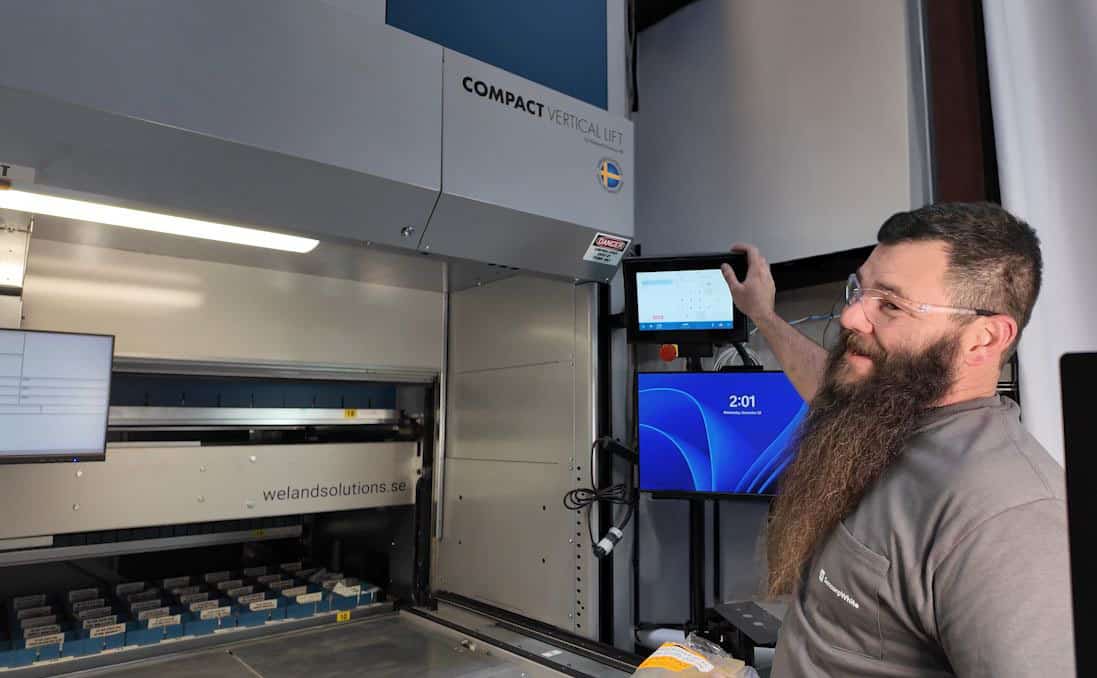
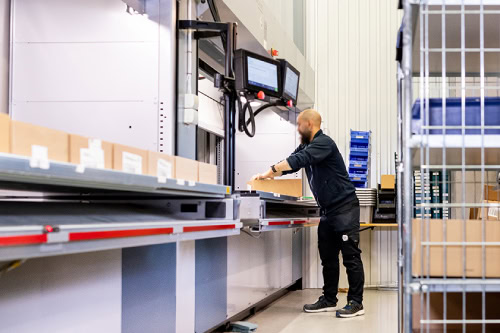
Vertical lift modules and vertical carousels can address multiple operational challenges by consolidating inventory, reducing operator travel, and supporting accurate retrieval.
However, the decision to automate should be based on measurable performance problems rather than equipment features alone.
Calculate the Potential Impact Before Investing
If your KPIs show that storage space or picking efficiency is costing your operation money, the next step is to quantify the opportunity.
Start with questions such as:
-
How many labor hours are spent walking and searching for inventory?
-
How much floor space is currently occupied by shelving and storage aisles?
-
What would it cost to expand or lease additional warehouse space?
-
How much are picking errors and inventory discrepancies costing annually?
Answering these questions provides a starting point for evaluating whether automation could deliver a worthwhile return on investment.
For facilities facing space constraints, White Systems’ space savings calculator can help estimate how much floor space could potentially be reclaimed with vertical storage.
Conclusion
Warehouse KPIs aren’t just numbers for monthly performance reports. They help reveal where facilities are losing time, underutilizing space, and spending more than necessary to store and retrieve inventory.
By tracking the metrics that matter most, warehouse managers can identify operational bottlenecks, prioritize improvements, and make better-informed investment decisions.
If your KPIs reveal excessive picker travel, limited storage capacity, or recurring inventory retrieval challenges, automated storage may be worth considering.
Explore our vertical lift modules and vertical carousels, or contact our team to discuss how automated storage could improve your warehouse performance.