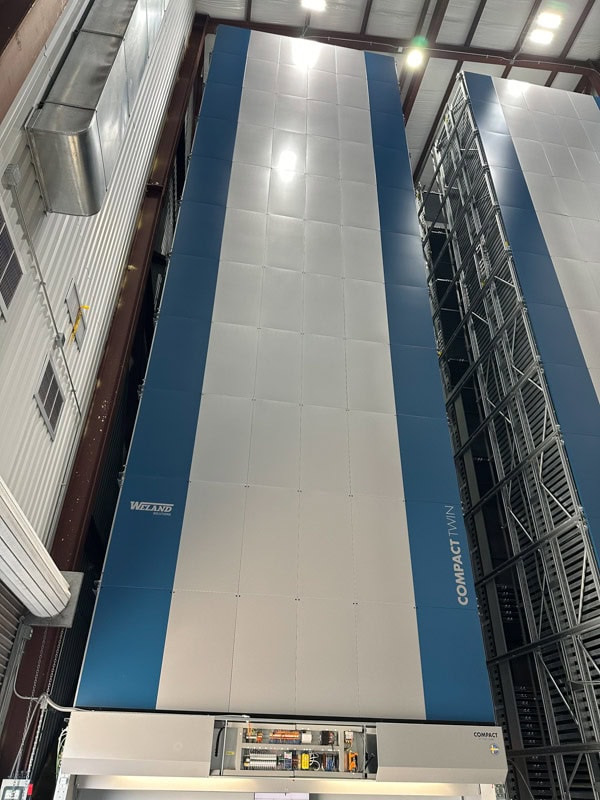
Warehouse Storage Solutions That Make Better Use of Your Space
The Core Problem: Most facilities don’t lack square footage—they lack usable vertical space. When inventory spreads horizontally, aisles widen, walk times skyrocket, and floor space that should be used for production, staging, or fulfillment gets completely swallowed up.
The right storage solutions for warehouse operations should do more than just hold parts. They should actively optimize your footprint, help your team find items faster, reduce picking errors, protect valuable inventory, and support the way your operation actually works.
What Are the Different Types of Warehouse Storage Solutions?
Warehouse storage solutions vary based on inventory size, pick frequency, available ceiling height, security requirements, and workflow. The most common options include static shelving, pallet racking, drawer cabinets, mezzanines, vertical lift modules, vertical carousels, horizontal carousels, and software-enabled automated storage systems.
For most facilities, the real question isn’t which single warehouse space optimization method to use for everything. It’s which method best supports each part of the operation. A slow-moving bulk storage area may need a completely different approach than a high-value parts room, a tool crib, or a frequently picked component area.
Common Warehouse Storage Options
Static Shelving
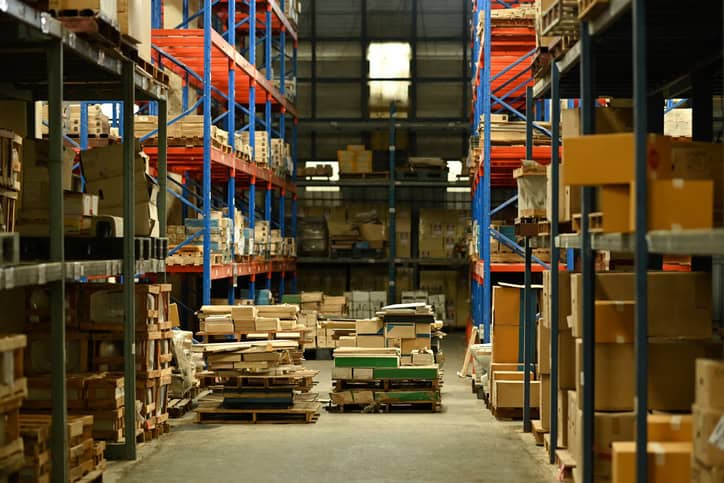
Static shelving is familiar and inexpensive upfront. But it uses a significant amount of floor space and typically requires workers to walk long distances, search manually, bend, and reach across rows of inventory. It can work for low-volume or low-value items, but it becomes harder to manage as inventory grows.
Pallet Racking
Pallet racking works well for palletized goods, bulk materials, and reserve inventory. It’s less suited for small parts, mixed SKUs, or inventory that requires tighter control. Racking also consumes significant aisle space, especially when forklift access is required.
Drawer Cabinets and Bin Shelving
Cabinets, bins, and drawer systems are a common warehouse storage solution for small items. They improve organization compared to open shelving, but they still spread inventory across the floor and rely heavily on manual search, labeling, and operator discipline to stay accurate.
Vertical Storage Solutions for Warehouses
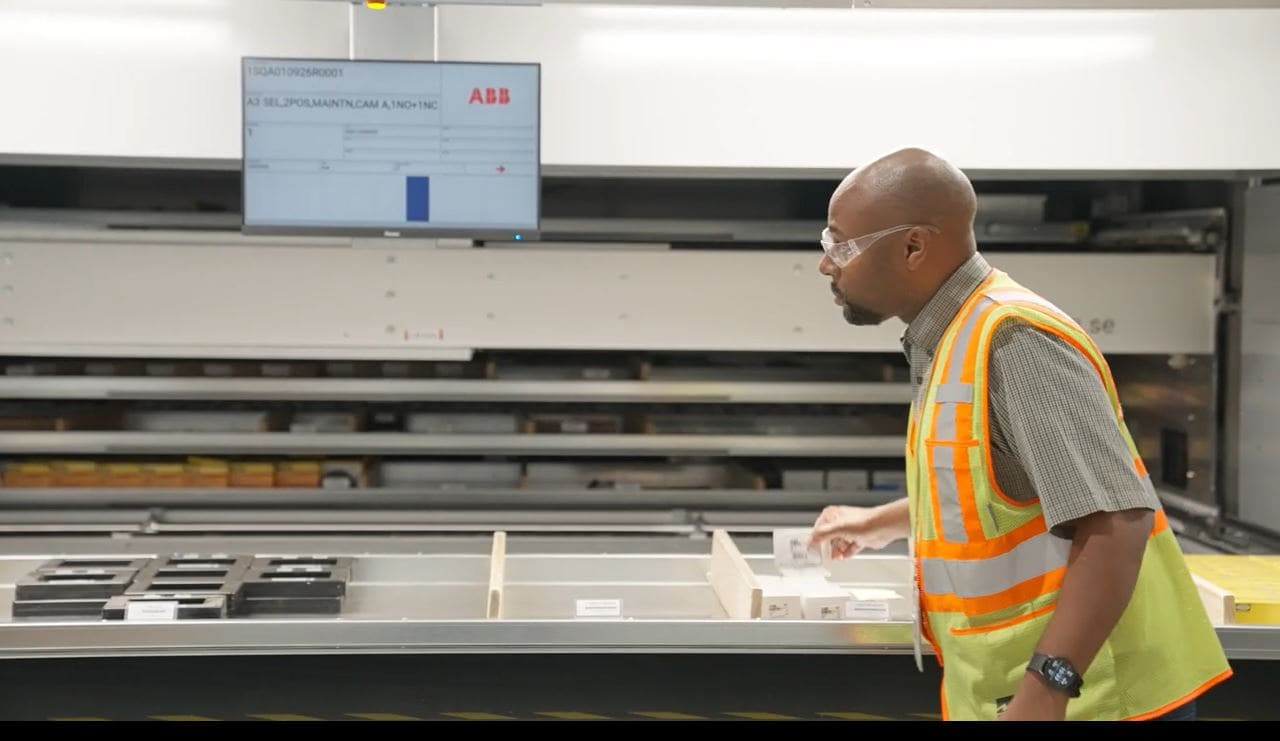
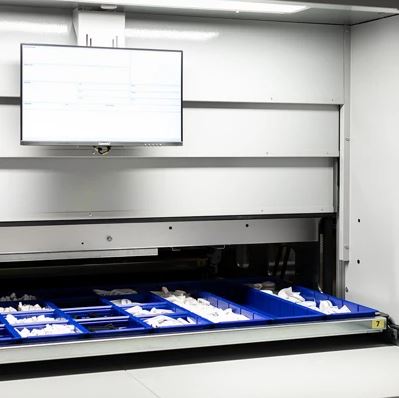
Vertical storage solutions for warehouses use available ceiling height instead of expanding the storage footprint across the floor. Systems like vertical lift modules store trays of inventory inside an enclosed unit and deliver the requested tray directly to an ergonomic access opening. This approach helps facilities reclaim floor space, speed up picking, reduce walking, and keep inventory more controlled.
For buyers comparing equipment options, our vertical lift module price guide explains the factors that influence VLM cost, including machine height, tray size, load capacity, software, installation, and service requirements.
Automated Warehouse Storage Solutions
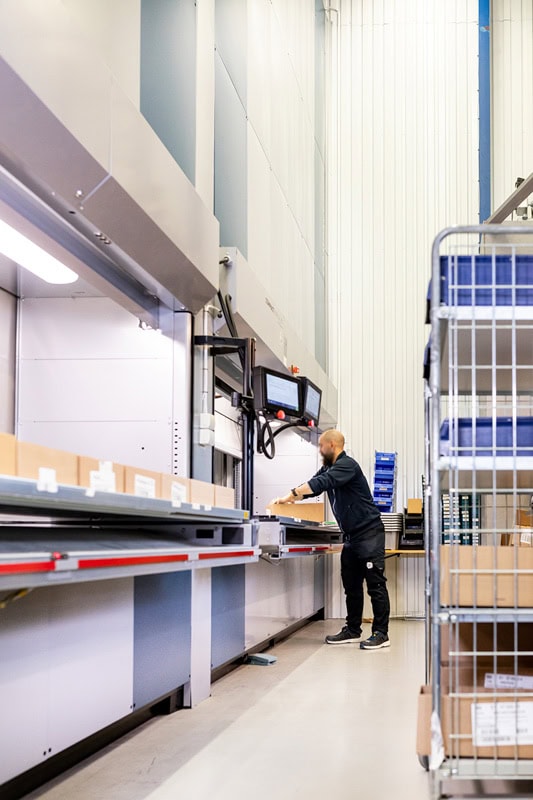
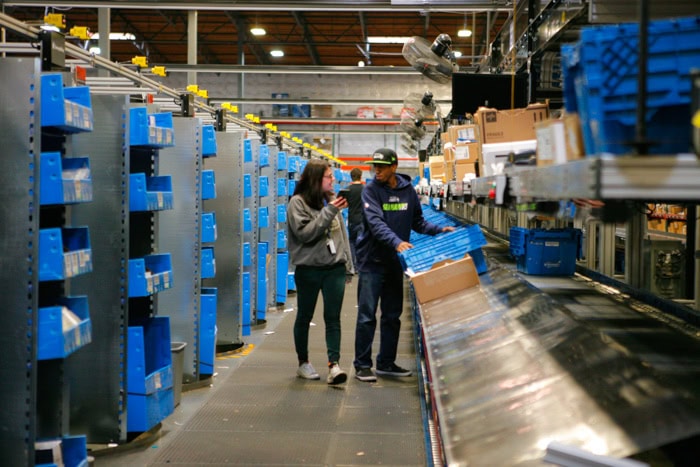
Automated warehouse solutions combine physical storage equipment with software, barcode scanning, inventory tracking, and guided picking workflows. Instead of relying on people to search through shelves or bins, the system directs the operator to the right item, quantity, and location. For facilities dealing with picking errors, lost parts, or inventory that’s difficult to track, this can be a significant operational improvement.
Automated storage is worth evaluating when your current setup is creating operational drag, not just when you are completely out of space.
Common signs include:
- Inventory is spreading into production, staging, or aisle space
- Employees spend too much time walking or searching for parts
- Picking errors are affecting orders, kits, maintenance, or production
- Small parts are hard to organize and control
- Valuable inventory needs better access control
- Your team is using ladders, awkward reaches, or inefficient picking paths
- Building expansion is too expensive or unavailable
The goal is not just to add storage. The goal is to make inventory easier to access, track, and control. If budget planning is part of the evaluation, see our guide to automated storage and retrieval system cost for the main factors that affect system pricing, installation, software, and long-term ROI.
Calculate your potential space savings — Talk to an expert →
Warehouse Storage Solutions for Small Items
Small items often create the biggest storage headaches. Components, fasteners, tools, spare parts, electronics, medical supplies, and maintenance inventory may not take up much space individually, but they become difficult to manage when spread across shelves, bins, drawers, or cabinets.
The best warehouse storage solutions for small items focus on three things: organization, access speed, and inventory accuracy.
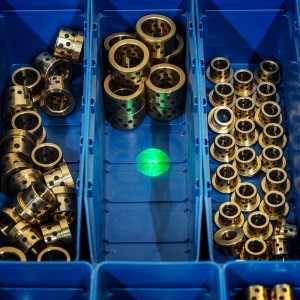
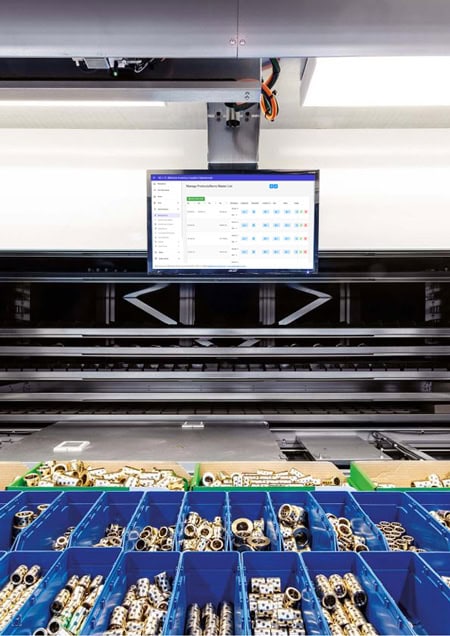
A vertical lift module can consolidate many small-item SKUs into a compact footprint, with trays organized using bins, dividers, totes, or custom layouts. Instead of relying on memory or manual search, operators can be directed to the correct tray, item, and storage location through inventory software.
This works especially well for MRO inventory and tool cribs, kitting areas, maintenance departments, and high-value small parts.
Warehouse Storage Solutions for Large Items
Large items present a different challenge. They can be heavy, awkward, or expensive, and they often consume significant floor space when stored in open racks or across standard shelving.
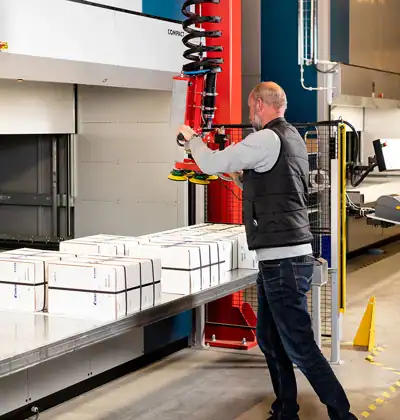
Storage solutions for large items need to account for weight, dimensions, pick frequency, and operator safety. Depending on the application, larger items may be stored in heavy-duty trays within a vertical storage system, in pallet racking, or in custom automated configurations. For facilities storing tooling, dies, molds, fixtures, or large maintenance parts, high-density vertical storage can often reduce the floor space required while keeping items more accessible.
High-Density Warehouse Storage Solutions
A high-density warehouse storage solution stores more inventory in less floor space by using vertical cube, tighter storage locations, and controlled access points rather than expanding horizontally across the building.
This is where vertical storage systems provide a clear advantage. By using unused ceiling height, a vertical lift module or vertical carousel can consolidate inventory that would otherwise require rows of shelving or cabinets. The result is a smaller storage footprint, shorter walking distances, and better organization without adding more storage rooms or expanding the building.
Secure Warehouse Storage Solutions
Some inventory needs more than open access. Expensive spare parts, tools, electronics, controlled materials, and customer-owned inventory often require tighter control to prevent loss, unauthorized access, or picking errors.
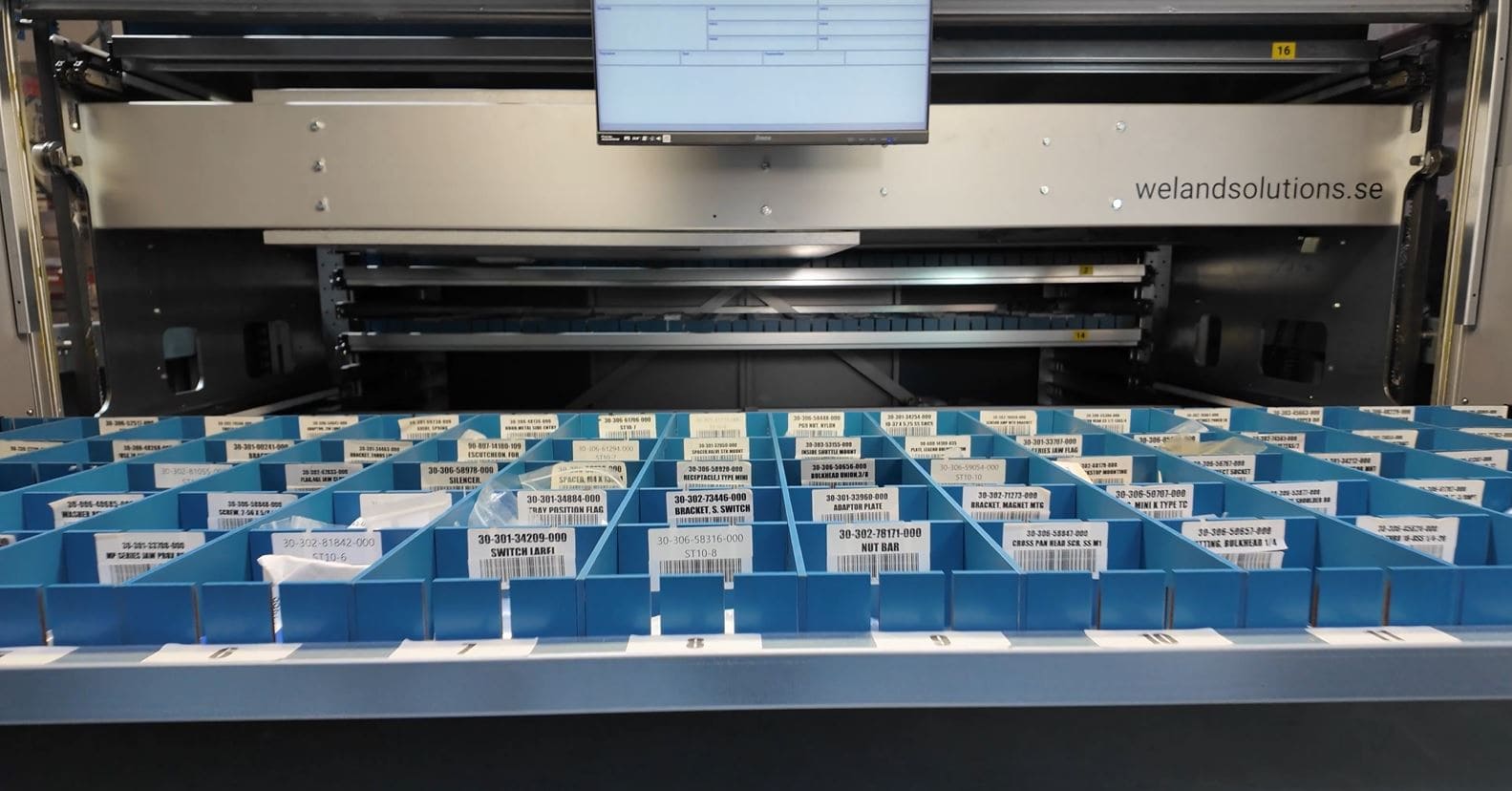
Secure warehouse storage solutions limit access, track user activity, and reduce risk around high-value inventory. Automated storage systems support this by keeping inventory inside an enclosed machine with software-controlled access. Teams can manage user permissions, track every pick, and improve accountability in ways that open shelving simply can’t match.
Warehouse Inventory Storage Solutions with Software Support
Storage equipment alone doesn’t solve every inventory problem. If your team still relies on memory, handwritten notes, spreadsheets, or inconsistent bin labeling, you can add more shelving and still struggle with inaccurate counts and wasted search time.
Warehouse inventory storage solutions are strongest when they include integrated inventory management software that supports item lookup, barcode scanning, user access control, pick lists, replenishment alerts, and integration with ERP or WMS systems. Software changes the workflow from “person-to-part” to “part-to-person.” For operations with many SKUs, multiple users, or high-value inventory, software-supported storage is the difference between being more organized and being truly in control.
Small Warehouse Storage Solutions
Smaller facilities face the same storage problems as larger ones, but with less room to absorb inefficiency. Every aisle, shelf, and staging area matters more when square footage is limited.
Small warehouse storage solutions should focus on using the full height of the building, reducing wasted walking time, and keeping inventory organized without expanding the footprint. A vertical storage system is particularly useful in smaller facilities because it allows teams to consolidate inventory into a much smaller floor footprint while still keeping everything accessible for picking, maintenance, or fulfillment.
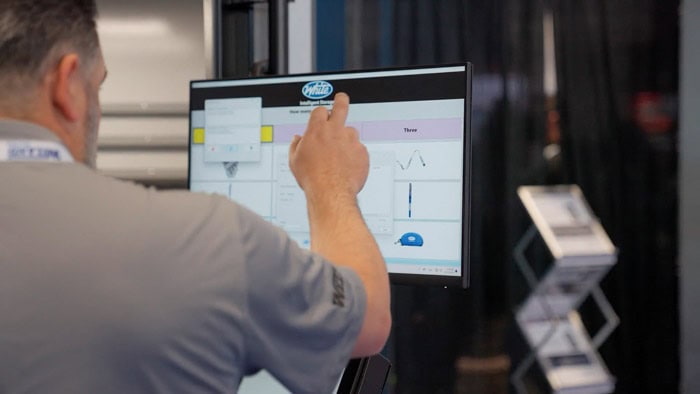
Our field service team demonstrates MILO™’s touchscreen interface live at a recent trade show.
How to choose the best warehouse storage solution
The best storage solutions for warehouse operations depend on the specific problem you’re trying to solve: recovering floor space, improving picking speed, controlling inventory, securing high-value items, or supporting a maintenance team.
A facility trying to recover floor space may need a different approach than one focused on picking speed, inventory control, or supporting a maintenance team. The right answer often involves more than one storage method working together rather than a single solution applied to everything.
See how we configure systems for active, brownfield facilities →
If you’re already comparing equipment types, tray sizes, load capacities, machine heights, or software requirements, visit our ASRS & VLM technical resource center for detailed specifications and planning resources.
Our automated storage lineup
Proven Picking & Storage Results
ABB improved parts storage and access with White Systems VLMs, eliminating 500+ bin locations and freeing valuable floor space.
Also solving high-volume order picking?
See the Boot Barn Horizontal Carousel Case Study

Where White Systems Fits In
White Systems designs automated warehouse storage solutions that help facilities use vertical space, centralize inventory, and bring stored items directly to the operator. Whether you’re evaluating a vertical lift module for small parts, high-density storage for a growing inventory, or a software-connected system to improve accuracy, White Systems supports the transition with specialized application expertise, ensuring the equipment integrates smoothly with their existing workflow.
Better storage can also improve how quickly teams find and retrieve inventory. Learn how warehouse picking solutions can help reduce search time, walking, and manual verification.
Ready to Reclaim Your Floor Space?
Stop letting underutilized ceiling height limit your operational efficiency. Contact White Systems today for a complimentary storage footprint analysis. Our team will help you evaluate your inventory mix, available cube space, and picking workflows to find the exact configuration for your facility.